Best Electric Heaters For RV of 2025
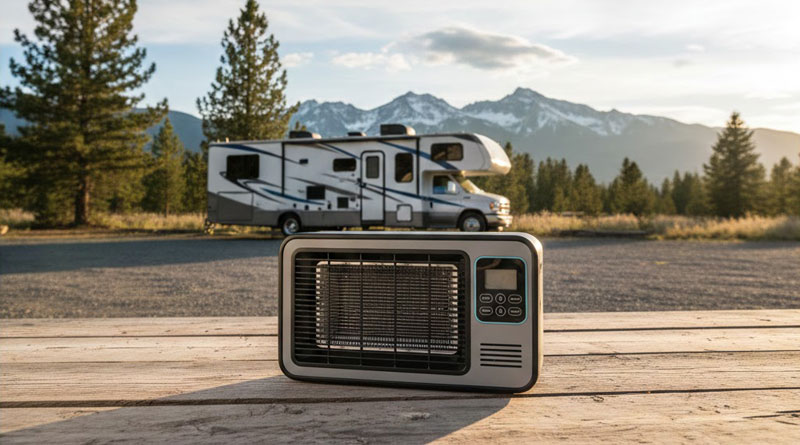
Choosing the best electric heater for your mobile abode involves balancing factors like wattage, safety features, portability, and heating capacity to match your specific RV size and travel habits. From compact plug-ins perfect for small spaces to powerful units designed for larger rigs, finding the right supplemental heat source can transform your cold-weather camping experience into one of ultimate comfort and warmth, without breaking the bank or tripping your circuit breaker.
1. Dreo Smart Wall Heater
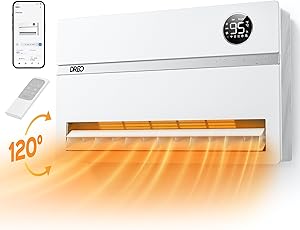
- Wattage: 1500W
- Oscillation: 120° Vertical
- Temperature Control: 41-95°F with 1°F accuracy
- Heating Coverage: Up to 200 sq. ft. (primary), 750 sq. ft. (supplementary)
The Dreo Smart Wall Heater stands out as a sophisticated solution for RV owners seeking efficient and intelligent heating. Its 120° vertical oscillation ensures widespread warmth, distributing heat evenly from top to bottom, which is particularly beneficial in an RV’s often confined yet varied spaces. The integration with the Dreo app, Alexa, and Google Home allows for unparalleled smart control, enabling you to schedule heating, adjust settings remotely, or simply use voice commands – a fantastic convenience when you’re relaxing or away from your RV.
Beyond its smart capabilities, this PTC ceramic heater delivers fast and precise temperature control, maintaining your desired warmth with 1°F accuracy, contributing to both comfort and potential energy savings. Designed for a good night’s sleep, it operates with lower noise and automatically adjusts its LED panel brightness in low-light conditions, ensuring minimal disturbance. Installation is hassle-free with included accessories and a drilling guide, and its reusable filter ensures easy maintenance. While 1500W is powerful, RV users should confirm circuit capacity. It’s an excellent choice for those prioritizing modern features, even heating, and quiet operation in their RV living space.
- Pros:
- Widespread and even 120° vertical heat distribution
- Advanced smart control via app, Alexa, and Google Home
- Fast and precise temperature regulation (1°F accuracy)
- Cons:
- Wall-mounted design might limit placement flexibility for some RVs
- 1500W might challenge some RV electrical circuits
2. Brightown Plug-in Heater with Remote

- Wattage: 800W
- Plug Design: 180° Rotating
- Heating Coverage: Up to 100 sq ft
- Noise Level: Under 40 dB
The Brightown 800W Plug-in Heater offers an incredibly compact and convenient heating solution, perfectly suited for the often-limited space in an RV. Its standout feature is the 180° rotating plug, allowing for flexible positioning directly into any standard wall outlet, whether upright or inverted. This ingenious design not only saves precious floor space but also eliminates the clutter and potential tripping hazards of cords, making it ideal for tight RV interiors where every inch counts. Operating at a low 800 watts, it’s energy-efficient and less likely to overload your RV’s electrical system, making it a safer choice for continuous use.
Despite its small size, this heater quickly warms small areas effectively and quietly, operating at under 40 dB, so it won’t disturb your sleep or peaceful RV environment. Enhanced safety features, including overheat protection and flame-retardant materials, provide peace of mind for 24/7 operation. The included remote control and clear LED display offer effortless temperature and 12-hour timer adjustments from across the room, adding to its user-friendly appeal. It’s an excellent choice for focused, supplemental heating in smaller RVs, bathrooms, or specific zones within a larger rig, providing reliable warmth without compromise on safety or convenience.
- Pros:
- Space-saving 180° rotating plug design
- Energy-efficient 800W for RV electrical systems
- Fast and near-silent heating operation
- Cons:
- Limited heating coverage (up to 100 sq ft)
- 800W might be too low for very cold RV environments
3. Caframo True North Heater
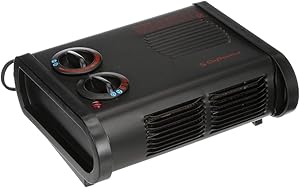
- Heat Output: Three settings (600W, 900W, 1500W) up to 5,125 BTU/hr.
- Power Requirements: 120V AC operation with 13.2 Amp maximum draw.
- Dimensions: Compact 11.25″ x 8″ x 5″ steel housing.
- Freeze Protection: Integrated thermostat activates automatically at 38°F (3°C).
The Caframo True North Heater is a rugged and reliable choice, particularly appealing to RV owners who value durability and essential functionality over smart features. Constructed with solid steel housing, this heater is built to withstand the rigors of travel and provides dependable warmth on the chilliest nights. Its low-profile design is a significant advantage in an RV, minimizing tip-over risk and making it easy to store securely when not in use. With three heat settings and two fan settings, it offers versatile climate control, allowing you to choose between steady heat and high output for maximum warmth and air circulation.
A standout feature for RV users is its ingenious anti-freeze setting. This mode automatically activates when the temperature drops to 38°F (3°C), ensuring the air temperature in your RV remains above freezing. This is an invaluable function for winter storage or when leaving your RV for extended periods in cold climates, protecting pipes and sensitive equipment from freezing damage. Despite its robust performance, the True North operates with ultra-quiet efficiency, ensuring your peace and quiet aren’t disturbed. For RVers seeking a sturdy, simple-to-operate, and safety-conscious heater with a critical anti-freeze capability, the Caframo True North is an excellent, no-nonsense option.
- Pros:
- Rugged solid steel housing for durability
- Essential anti-freeze setting for winter protection
- Stable low-profile design prevents tip-overs
- Cons:
- Lacks advanced smart features or remote control
- Less precise temperature control compared to digital models
4. Dr Infrared Heater Portable Space Heater
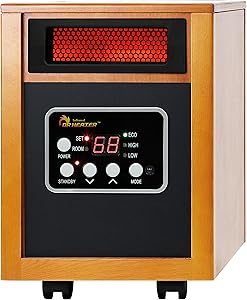
- Wattage: 1500W
- Heating System: Dual (Infrared Quartz + PTC)
- Noise Level: 39 dB
- Portability: Caster Wheels
The Dr Infrared Heater Portable Space Heater is a powerful and efficient option designed to provide substantial warmth, making it a suitable choice for larger RVs or those facing colder climates. Its innovative dual heating system, combining infrared quartz tubes with PTC ceramic elements, delivers 60% more heat than many conventional heaters, rated around 5200 BTU. This ensures rapid and thorough heating for a significant area, transforming your RV into a comfortable haven even when temperatures drop. Despite its powerful output, it maintains a remarkably low noise level of just 39 dB thanks to its high-pressure, low-noise blower, ensuring that your peace and quiet are preserved.
Portability is made easy with integrated caster wheels, allowing you to effortlessly move the heater wherever warmth is most needed in your RV. It features an electronic thermostat with a wide range from 50 to 85 degrees Fahrenheit, paired with an IR remote control for convenient adjustments. Comprehensive safety features like tip-over and overheat protection, along with a 12-hour automatic shut-off timer, provide essential peace of mind. While its 1500-watt output requires careful consideration of your RV’s electrical capacity, the Dr Infrared Heater stands out for its robust heating performance, quiet operation, and built-in portability, offering a premium heating experience on the go.
- Pros:
- Powerful dual heating system for rapid and extensive warmth
- Quiet operation at only 39 dB
- Portable with smooth-rolling caster wheels
- Cons:
- 1500W draw might challenge smaller RV electrical systems
- Larger footprint compared to compact plug-in heaters
5. Dreo Smart Wall Heater

- Wattage: 1500W
- Airflow: 11.5 ft/s
- Waterproof Rating: IP24
- Noise Level: 28 dB
The Dreo Smart Wall Heater with IP24 rating offers a compelling blend of powerful heating, intelligent control, and enhanced durability, making it an excellent consideration for RV environments where moisture might be a factor. Its PTC heating system and optimized airflow design deliver robust warmth with an impressive 11.5 ft/s airflow while operating at a whisper-quiet 28 dB – an essential feature for maintaining tranquility in your RV. The 30° manual oscillation allows for precise heat direction, ensuring that specific areas or corners of your rig receive focused warmth efficiently.
Smart control convenience is at your fingertips, with options to manage the heater via the remote, the DREO app, or voice commands through Alexa, offering flexibility whether you’re inside or outside your RV. The precise ECO mode is particularly valuable, allowing you to set an ideal room temperature for comfort while promoting energy efficiency, a key consideration for RV power consumption. Constructed with 5 VA flame-retardant materials, overheat protection, and an IP24 waterproof rating, this heater provides secure and worry-free warmth, even in areas prone to light splashes or dampness, like near an RV bathroom or kitchen.
- Pros:
- Strong 11.5 ft/s airflow and powerful PTC heating
- Ultra-quiet operation at only 28 dB
- IP24 waterproof rating for added versatility in RVs
- Cons:
- Wall-mounted design limits placement flexibility
- 1500W can strain smaller RV electrical systems
6. GiveBest Smart Wall Heater

- Wattage: 1500W
- Heating System: PTC ceramic
- Noise Level: 34 dB
- WiFi Compatibility: 2.4 GHz only
The GiveBest Smart Wall Heater offers a blend of fast, efficient heating and modern smart control, making it an attractive option for RV owners looking to enhance their climate control. Featuring a PTC heating system and optimized airflow, this wall-mounted heater quickly delivers warmth at a quiet 34 dB, ensuring your RV becomes cozy without disturbing your peace. The ability to precisely manage temperature through three modes—Heat, ECO, and Fan—is particularly useful for RV living, allowing you to prioritize either maximum warmth or energy savings with the ECO mode, which helps reduce power consumption and costs.
Comprehensive safety is a cornerstone of this heater, built with V-0 rated flame-retardant materials and equipped with overheat protection for reliable 24/7 operation—a critical consideration for any RV appliance. Smart control options, including a remote, user-friendly app, and voice commands via Alexa, provide exceptional convenience, letting you adjust settings without leaving your seat. It’s important to note its compatibility with 2.4 GHz WiFi only. Installation is straightforward with an included template, allowing you to mount it securely on an RV wall, freeing up valuable floor space. For RVers desiring a smart, safe, and space-saving heating solution, the GiveBest Smart Wall Heater delivers warmth effectively.
- Pros:
- Fast and efficient PTC ceramic heating system
- Quiet operation at a modest 34 dB
- Comprehensive safety features (V-0 flame-retardant, overheat protection)
- Cons:
- Wall-mounted design may limit placement options for some RV layouts
- 1500W power draw requires attention to RV electrical capacity
7. Dreo Portable Space Heater

- Wattage: 1500W
- Heating System: Hyperamics PTC ceramic
- Noise Level: 34dB
- Safety Features: Tilt-detection sensor, V0 flame retardant
The Dreo Portable Space Heater, with its 2024 upgraded features, presents an ideal balance of power, safety, and portability for RV enthusiasts. Utilizing a Hyperamics 1500W advanced PTC system combined with a new heat funnel design, it delivers warmth within seconds and boasts a significantly farther reach than many traditional heaters. This rapid and efficient heating is crucial for quickly warming up an RV after a chilly day. The portability is a key advantage for RV life, allowing you to easily move the heater to different zones within your rig or even take it outside under an awning on a cool evening, thanks to its convenient handle.
Safety is paramount with the Dreo portable heater, featuring an innovative tilt-detection sensor for improved tip-over protection, V0 flame-retardant materials, overheat protection, and a safety plug, all ETL certified. This comprehensive approach provides invaluable peace of mind when operating in a mobile environment. The enhanced NTC chipset ensures ultimate temperature control, allowing precise settings from 41-95℉ in 1℉ increments, optimizing comfort and energy efficiency. Furthermore, its brushless DC motor and winglet fan design ensure quiet operation at just 34dB, letting you enjoy warmth without disruptive noise. With multiple heating levels, an ECO mode, remote control, 12-hour timer, and child lock, this portable heater is exceptionally well-suited to the diverse needs of RV living.
- Pros:
- Powerful and fast Hyperamics 1500W PTC heating
- Advanced safety features including precise tilt-detection
- Highly portable with a convenient carry handle
- Cons:
- 1500W might overload some older or smaller RV circuits
- Takes up floor space unlike wall-mounted options
How to Choose Electric Heaters For RV
Embarking on RV adventures often means embracing various climates and temperatures. While your RV’s built-in furnace is essential, supplementing it with an electric heater can offer significant advantages: quieter operation, more consistent heat, and often lower running costs when hooked up to shore power. However, not all electric heaters are created equal, especially when considering the unique constraints and requirements of an RV. Choosing the best electric heater involves careful consideration of several factors, from the size of your rig to its electrical capacity and your specific heating needs. This guide will walk you through everything you need to know to make an informed decision and ensure your RV remains a comfortable haven, no matter the weather outside.
Understanding RV Heating Needs
Before diving into specific heater types, it’s crucial to understand what makes RV heating different from heating a sticks-and-bricks home. RVs are mobile, often have less insulation, and operate on limited electrical power. These factors directly influence the type and size of electric heater that will be most effective and safe.
Size of Your RV
The square footage of your RV directly impacts the heating capacity you’ll need. A small pop-up camper or travel trailer will warm up quickly with a low-wattage heater, while a large fifth-wheel or Class A motorhome might require a more powerful unit or even multiple heaters for effective zone heating. Always consider the manufacturer’s recommended heating coverage area in square feet when comparing models.
Insulation Levels
RV insulation varies wildly. Older RVs or those designed for fair-weather camping typically have minimal insulation, meaning heat escapes quickly. In such cases, a heater with a higher BTU output or one that provides radiant heat might be more effective. RVs built for four-season use will retain heat better, allowing you to use less powerful, more energy-efficient heaters.
Climate You’ll Be In
Are you primarily camping in mild fall temperatures, or do you plan on winter excursions to colder regions? The ambient outside temperature will dictate how much supplemental heat you’ll need. For extreme cold, you might even consider heaters with anti-freeze settings or robust dual-heating systems.
Power Availability (Shore Power vs. Generator)
This is arguably the most critical factor for RV electric heaters. Most RV park pedestals offer 30-amp or 50-amp service. A 1500-watt electric heater draws approximately 12.5 amps (at 120V). If your RV is on a 30-amp service, you have a maximum of 3600 watts available for all appliances. Running too many high-wattage devices simultaneously can trip your breaker. Understanding your RV’s electrical system and the amperage draw of your heater is vital to prevent overloads. Lower wattage heaters (e.g., 750W or 800W) are generally safer bets for RVs, especially on 30-amp service, or if you plan to run other appliances like a microwave or coffee maker.
Types of Electric RV Heaters
Various technologies are employed in electric heaters, each with its own benefits for RV use.
Ceramic Heaters (PTC)
Ceramic (PTC) heaters use ceramic plates that heat up quickly and efficiently. They are excellent at providing immediate, direct heat. Many portable and wall-mounted RV heaters use this technology. They often include fans to distribute warm air, making them effective for quickly raising the temperature in a specific area. Their efficiency and compact size make them a popular choice for RVs.
Infrared Heaters
Infrared heaters work by emitting radiant heat, similar to the sun. Instead of heating the air, they directly heat objects and people in their path. This can feel very comfortable and is less prone to heat loss through drafts. They tend to be very efficient for zone heating and can maintain warmth without constant fan noise, though some models do incorporate fans to help circulate the radiant heat. Many popular RV models combine infrared with other heating elements.
Convection Heaters
Convection heaters work by heating the air that passes over an electric element, then allowing that warm air to rise and circulate throughout the room. They are slower to heat a space than ceramic or infrared but can provide a more even, ambient warmth. Oil-filled radiators are a type of convection heater that store heat within an oil reservoir, providing sustained warmth even after the unit is turned off. They are typically silent but can be bulky and heavy.
Oil-Filled Radiators
As mentioned, these are a type of convection heater. They are known for their silent operation and ability to provide a consistent, gentle heat that lingers. They are often safer to the touch than other heaters. However, they are generally heavier and take longer to heat a space, which might not be ideal for quick warmth in an RV. Their bulk can also be a storage consideration.
Fan Heaters
Simple fan heaters use an electric coil and a fan to quickly blow hot air into a space. They are often inexpensive and provide immediate warmth but can be noisy and less energy-efficient for sustained heating. They are best suited for small, quickly chilling areas or as a very temporary boost of heat.
Key Features to Consider
Once you understand the different types, look for these specific features that enhance comfort, safety, and efficiency in an RV setting.
Wattage and Amperage
Always double-check the wattage (W) and corresponding amperage (A) of any electric heater. For 120V systems (standard in North America), 1500W draws 12.5A, and 800W draws about 6.7A. Prioritize lower wattage models if your RV has a 30-amp service to avoid tripping breakers, especially if you need to run other appliances. Heaters with selectable wattage (e.g., 750W/1500W) offer valuable flexibility.
Safety Features
Given the confined and potentially mobile nature of an RV, safety features are non-negotiable. Look for:
- Tip-over protection: Automatically shuts off the heater if it’s accidentally knocked over.
- Overheat protection: Turns the unit off if it gets too hot, preventing fire hazards.
- Cool-touch exterior: Important for RVs with pets or children, or simply when space is tight.
- Flame-retardant materials: Ensures the heater housing itself won’t easily ignite.
Thermostat and Timer
An adjustable thermostat allows you to set and maintain a desired temperature, helping to conserve energy by only heating when necessary. A timer feature is also beneficial for scheduling heating cycles, perhaps warming the RV before you wake up or arrive back from an outing.
Portability and Mounting Options
Consider whether you need a portable heater that can be moved between different areas of the RV or a more permanent, wall-mounted solution that saves floor space. Portable heaters with handles or caster wheels are convenient. Wall-mounted heaters are excellent for space-saving but require installation.
Noise Level
RV living often means living in close quarters. A noisy heater can quickly become an annoyance, especially during sleeping hours. Look for models explicitly advertised as “quiet” or with low decibel (dB) ratings. Infrared and oil-filled radiators tend to be the quietest, while fan-forced ceramic heaters can vary.
Smart Features
Some modern electric heaters come with smart capabilities like app control, Wi-Fi connectivity, or voice assistant compatibility (Alexa, Google Home). These can be incredibly convenient for remote control, scheduling, and monitoring, adding a touch of modern luxury to your RV experience.
Durability and Construction
An RV heater needs to withstand vibrations and movement. Look for robust construction, quality materials, and a stable design. A low-profile design can also prevent accidental tip-overs.
Installation and Placement Tips
Once you’ve chosen your heater, proper installation and placement are key to both safety and effectiveness.
Avoid Overloading Circuits
Always plug your electric heater into an appropriate outlet. Avoid using extension cords unless they are heavy-duty, rated for the heater’s wattage, and specifically designed for appliance use. Never plug an electric heater into a power strip with other appliances.
Clearance from Combustibles
Position your heater on a stable, level surface, away from anything flammable such as curtains, bedding, furniture, or paper. Most manufacturers recommend at least three feet of clearance around the heater. Ensure the heater’s vents are not blocked, which can lead to overheating.
Optimal Placement for Heat Distribution
For convection and fan-forced heaters, place them in an open area where air can circulate freely. For radiant (infrared) heaters, place them where their heat rays can directly reach the occupants or desired objects. Avoid placing heaters directly under windows, as heat can be lost quickly.
Secure Mounting
If you opt for a wall-mounted heater, ensure it is securely installed according to the manufacturer’s instructions. Use appropriate anchors for RV walls, which can be thinner than standard home walls. Double-check that it won’t shift during travel.
Energy Efficiency and Cost Savings
Electric heaters can be energy hogs if not used wisely. Here’s how to maximize efficiency in your RV:
ECO Modes
Many modern heaters feature an “ECO mode” that intelligently adjusts power output to maintain a set temperature while using the least amount of electricity. This is invaluable for conserving energy and reducing costs.
Zone Heating
Instead of trying to heat the entire RV with one small electric heater, consider using it to heat only the occupied areas (e.g., the living space during the day, the bedroom at night). This is more efficient than cranking up the furnace to heat the entire rig.
Insulation Synergy
Improve your RV’s insulation where possible. Cover windows with thermal curtains, seal drafts, and ensure your underbelly is protected. Better insulation means your electric heater won’t have to work as hard, saving power and extending its lifespan.
Maintenance and Longevity
Most electric heaters require minimal maintenance, but a few simple steps can ensure longevity:
- Clean regularly: Dust can accumulate on heating elements and fan blades, reducing efficiency and potentially posing a fire hazard. Use a soft cloth or vacuum attachment to keep the unit clean.
- Check filters: If your heater has an air filter, clean or replace it as recommended by the manufacturer.
- Inspect cords: Periodically check the power cord for any signs of fraying, cracking, or damage. Replace immediately if damaged.
- Store properly: When not in use, store your heater in a dry, safe place to protect it from damage.
Conclusion
Choosing the best electric heater for your RV is a crucial step toward ensuring comfort and warmth on your travels. By carefully considering your RV’s size, insulation, electrical capacity, and the types of heaters available, you can select a model that perfectly suits your needs. Prioritizing safety features, energy efficiency, and ease of use will lead to a reliable heating solution that enhances your RVing experience for years to come. With the right electric heater, you’ll be well-equipped to face any chilly weather the open road throws your way, transforming your mobile sanctuary into a truly cozy home on wheels.