
Best RV TV Antenna Upgrades of 2026
Enhancing your RV experience often means ensuring access to entertainment on the road. A reliable TV antenna is crucial for capturing local broadcasts, but older models often fall short. Upgrading your RV TV antenna can unlock sharper images, more channels, and a more enjoyable journey, letting you stay connected to news and shows wherever your travels take you.
1. Winegard RZ-6000 Rayzar z1 RV TV Antenna – White

- Type: Amplified RV HDTV antenna
- Reception: VHF/UHF over-the-air channels
- Design: Low-profile dome styling
- Installation: Simple roof-mount
The Winegard RZ-6000 Rayzar z1 offers a sleek and modern solution for RVers seeking reliable over-the-air TV reception. Its amplified design effectively boosts signals, ensuring enhanced reception of both VHF and UHF channels, delivering free local TV in HD. The low-profile dome styling isn’t just aesthetically pleasing; it significantly reduces wind drag during travel, making it a practical choice for any RV or camper. This antenna is also ready for 4K and ATSC 3.0 broadcasts, future-proofing your entertainment setup.
Installation is straightforward, designed for simple roof-mounting, allowing you to quickly get connected to your favorite shows and news wherever your adventures lead. While its omni-directional nature offers convenience, like all antennas, signal strength can vary based on location and proximity to broadcast towers. However, for a dependable, stylish, and easy-to-install option, the Rayzar z1 stands out.
- Pros:
- Sleek, low-profile design
- Enhanced VHF/UHF reception
- Easy roof-mount installation
- 4K and ATSC 3.0 ready
- Cons:
- Range depends on location
- Roof-mount only
2. GE Portable HD TV Antenna (20 Mile Range)

- Range: Up to 20 miles
- Reception: 360° for VHF/UHF channels
- Compatibility: 1080p, 4K, 8K, ATSC 3.0 Ready
- Mounting: Strong magnetic base
The GE Portable HD TV Antenna is an exceptionally versatile option for RVers, campers, and anyone needing TV on the go. Its compact, monopole design and magnetic base allow for easy placement on metal surfaces, making it ideal for travel, tailgating, or even home use. This antenna delivers free HD channels in full 1080p, and is ready for 4K and 8K Ultra HD, plus the upcoming NEXTGEN TV (ATSC 3.0) standard, ensuring future compatibility and a superior viewing experience.
With 360° signal reception, there’s no need for precise aiming, simplifying setup wherever you are. While its 20-mile range is perfect for areas closer to broadcast towers, it might be limited in more remote locations. However, its portability and ease of use, combined with U.S.-based tech support, make it a reliable and convenient choice for quick, on-the-spot TV access.
- Pros:
- Highly portable and compact
- Magnetic base for easy placement
- 360° signal reception
- ATSC 3.0 compatible
- Cons:
- Limited 20-mile range
- Best for close-range signals
3. Five Star Upgraded 2024 Omni-Directional Outdoor HD Digital TV Antenna

- Range: Up to 150+ miles
- Reception: 360° Omni-Directional VHF/UHF
- Filter: Built-in 4G LTE Filter
- Compatibility: ATSC 3.0, 4K 1080P HD
The Five Star Upgraded 2024 Omni-Directional Antenna is a powerhouse for securing free HD entertainment on your RV or at home. Boasting an impressive range of over 150 miles, it’s designed to pull in a vast array of local broadcast channels, offering clearer pictures and a diverse content selection without monthly fees. Its omni-directional capability means no manual aiming, simplifying setup and ensuring consistent reception from all directions.
A key feature is the integrated 4G LTE filter, which actively blocks wireless signal interference for a stable, crystal-clear 4K HDTV experience. Durability is also a highlight, with an anti-UV coating and waterproof/snowproof design ensuring reliable performance in harsh weather conditions. While primarily omni-directional, the manufacturer notes optimal performance for signals within 40-60 miles, suggesting that very long-range signals might still benefit from some directional optimization if they’re particularly weak. This antenna is an excellent choice for those seeking expansive coverage and robust interference protection.
- Pros:
- Impressive 150+ mile range
- Omni-directional, no aiming
- Effective 4G LTE filter
- Durable, weather-resistant design
- Cons:
- Optimal omni-range 40-60 miles
- May require specific placement for weakest signals
4. Winegard RV-3095 Sensar III Batwing Amplified RV TV Antenna
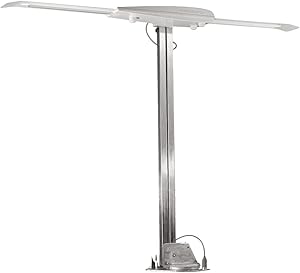
- Range: Up to 55 miles
- Reception: VHF/UHF, Digital, 4K Ready
- Design: Classic “Batwing” amplified
- Durability: Proven long-lasting design
The Winegard RV-3095 Sensar III, affectionately known as the “Batwing,” is an enduring classic in the RV antenna world, celebrated for its proven durability and reliable performance. With over two decades of use on RV roofs, its robust construction ensures it withstands the rigors of travel and various weather conditions. This amplified antenna is designed to pull in digital and HD channels from up to 55 miles away, making it a solid choice for accessing free local broadcasts.
It supports both VHF and UHF frequencies and is 4K ready, ensuring clear picture quality. While it’s a directional antenna, requiring manual aiming for optimal reception, this often translates to a stronger, more stable signal than some omni-directional models in challenging environments. For RVers prioritizing a dependable, long-lasting antenna that gets the job done without fuss, the Sensar III remains a top contender, offering a time-tested solution for on-the-road entertainment.
- Pros:
- Extremely durable and reliable
- Proven track record for RV use
- Amplified for better signal strength
- 55-mile extended range
- Cons:
- Directional, requires aiming
- Classic design might not suit all aesthetics
5. 1byone Outdoor TV Antenna (100+ Miles Range)

- Range: 100+ miles
- Reception: 360° Omni-Directional VHF/UHF
- Amplifier: Built-in Pre-Amplifier with Smart pass
- Filter: 4G LTE Filter
The 1byone Outdoor TV Antenna provides an excellent blend of long-range reception and user convenience, making it ideal for RV, attic, or home outdoor use. Its impressive 100+ mile range, coupled with 360° omni-directional reception, means you can pull in signals from various directions without the need for constant rotation or aiming. The enhanced Smart pass amplifier technology ensures better signal reliability, especially on days with less-than-ideal weather, providing clear 4K pictures.
This antenna also features a built-in pre-amplifier and 4G LTE filter, crucial for boosting weak signals and eliminating interference from mobile phone signals. Installation is designed to be tool-free and straightforward, and it comes with a generous 32ft RG6U coaxial cable for flexible placement. While designed for single TV output for optimal signal strength, its comprehensive features offer a robust solution for cutting cable and enjoying free, high-quality local broadcasts.
- Pros:
- Exceptional 100+ mile range
- True 360° omni-directional reception
- Built-in amplifier and 4G LTE filter
- Easy, tool-free installation
- Cons:
- Recommended for single TV output
- Performance depends on broadcast towers
6. Amplified RV Antenna by Continu.us | CA1500 Digital TV

- Range: 55 miles
- Reception: 360° Omni-Directional VHF/UHF
- Outputs: 2 TV outputs with power amplification
- Design: Low profile, weatherproof, UV resistant
The Continu.us CA1500 Amplified RV Antenna is a reliable and popular choice, already factory-installed in thousands of RVs. Its key appeal lies in its omni-directional capability, which allows it to pick up strong signals from all directions without needing to be aimed or cranked up. This convenience is a significant advantage for RVers constantly changing locations, providing hassle-free access to digital and HD broadcasts up to 55 miles away.
Beyond ease of use, this antenna is designed for durability, featuring a weatherproof and UV-resistant construction that withstands temperatures from -25°F to 145°F without fading or damage. The low-profile design, standing just 7 inches tall, minimizes wind resistance and maintains a sleek look on your RV roof. With two TV outputs and built-in power amplification, it efficiently boosts signals to multiple televisions, making it an excellent all-around solution for reliable on-the-road entertainment.
- Pros:
- Omni-directional, no aiming required
- Supports two TV outputs
- Extremely durable and weatherproof
- Low-profile and UV resistant
- Cons:
- 55-mile range might be limiting in very remote areas
- Requires roof-mount installation
7. Winegard RZ-6035 Rayzar z1 RV TV Antenna – Black

- Reception: Optimal UHF with strong High-Band VHF
- Design: Streamlined, compact (8.4″ tall)
- Operation: Effortless rotation, no cranking
- Testing: Rigorously tested for RV conditions
The Winegard RZ-6035 Rayzar z1 in black offers a sophisticated and functional upgrade for any RV. This antenna prioritizes strong reception for both UHF and High-Band VHF channels, ensuring you can reliably catch a wide array of broadcast programs wherever your travels take you. Its design is a significant advantage: at just 8.4 inches tall, it boasts a minimal footprint and a modern aesthetic that complements any RV while reducing wind resistance.
One of its most appealing features is the effortless rotation mechanism, eliminating the need for traditional cranking. This simplifies the process of finding the best signal, allowing for quick adjustments without external tools. Rigorously tested for typical RV conditions, it ensures durability and consistent performance on the road. This Rayzar z1 model offers a blend of performance, ease of use, and modern design, making it an excellent choice for a hassle-free TV experience.
- Pros:
- Strong UHF and VHF reception
- Modern, compact, low-profile design
- Effortless rotation, no cranking
- Built for RV durability
- Cons:
- Directional, requires manual rotation
- Range varies by location
How to Choose the Best RV TV Antenna Upgrades
For many RV enthusiasts, the open road offers unparalleled freedom and adventure. Yet, even away from home, the desire for entertainment and staying connected with news and weather remains strong. This is where a reliable RV TV antenna comes into play. While many RVs come equipped with a factory-installed antenna, these often lack the range, clarity, or modern features needed for today’s digital broadcasts.
Upgrading your RV TV antenna isn’t just about getting more channels; it’s about enhancing your travel experience with consistent, high-quality reception, even in remote locations. A premium antenna can transform your RV into a mobile entertainment hub, providing access to free over-the-air (OTA) high-definition content, including local news, sports, and your favorite shows, all without a monthly subscription. This guide will walk you through everything you need to know to choose the best RV TV antenna upgrade, ensuring you make an informed decision that suits your travel style and entertainment needs.
Understanding RV TV Antennas
Before diving into specific features, it’s essential to understand the basic types and technologies behind RV TV antennas. This knowledge will help you better assess which upgrade aligns with your expectations and typical travel routes.
Omnidirectional vs. Directional Antennas
- Omnidirectional Antennas: These antennas receive signals from all directions (360 degrees) simultaneously. Their primary advantage is convenience: you don’t need to orient them towards a broadcast tower. Once installed, they’re ready to pick up signals from any direction, making them ideal for frequent movers or those who prefer a “set it and forget it” approach. However, this convenience often comes at the cost of range and signal strength compared to directional antennas, as they cannot focus on a single signal source.
- Directional Antennas: Often recognizable by their “batwing” or Yagi-style designs, directional antennas must be pointed directly at the broadcast tower for optimal reception. While this requires manual adjustment—often via a crank inside the RV—it allows them to focus their gain on a specific signal, leading to better range and stronger, more stable reception, particularly in weaker signal areas. Many classic RV antennas, like the Winegard Sensar series, fall into this category.
Amplified vs. Non-Amplified Antennas
- Amplified Antennas: These antennas come with a built-in signal booster, often called a pre-amplifier or in-line amplifier. This amplifier strengthens the weak signals received by the antenna before they travel down the coaxial cable to your TV. Amplified antennas are crucial for improving reception, especially in fringe areas far from broadcast towers, or when splitting the signal to multiple TVs. They typically require a power source, usually 12V DC from your RV’s system.
- Non-Amplified Antennas: Simpler in design, non-amplified antennas rely solely on their physical design to capture signals. They are generally suitable for areas with very strong broadcast signals or for those looking for a basic, low-cost solution. However, they are less common in RV applications due to the varying signal environments encountered during travel.
Indoor, Outdoor/Roof-Mount, and Portable Antennas
- Roof-Mount Antennas: The most common type for RVs, these antennas are permanently installed on the RV roof. They benefit from height, which helps clear obstacles and provides a better line of sight to broadcast towers. Roof-mounts can be either omnidirectional or directional. Installation often involves drilling and proper sealing to prevent leaks.
- Portable Antennas: These versatile antennas can be set up outside your RV on a tripod, mast, or even inside by a window. They offer flexibility in positioning to find the best signal, especially if your RV itself is parked in a poor reception spot. Portable antennas are great for tailgating, camping, or as a backup, but they require setup and takedown each time.
- Indoor Antennas: While less common for primary RV use, small indoor antennas can be a convenient option for very strong signal areas or as a quick temporary solution. They are typically very compact and easy to store.
Key Factors to Consider When Upgrading
Choosing the best RV TV antenna upgrade involves evaluating several critical factors. Each aspect plays a role in determining the antenna’s performance, ease of use, and suitability for your specific travel habits.
Range (Miles)
The advertised range of an antenna (e.g., 50 miles, 150 miles) indicates the maximum distance from broadcast towers from which it’s theoretically capable of receiving signals. However, “actual” range can vary significantly due to terrain, obstructions (trees, buildings), and atmospheric conditions.
Consider:
- Travel Style: Do you mostly stay in populated areas with strong signals, or do you venture into remote campgrounds? For remote areas, aim for higher range antennas (70+ miles).
- Amplification: Higher range often implies robust amplification to boost weaker signals from afar.
Reception Type (VHF/UHF and ATSC 3.0 Ready)
Digital TV broadcasts use two main frequency bands: VHF (Very High Frequency) and UHF (Ultra High Frequency).
Consider:
- VHF vs. UHF: Ensure your antenna supports both. Many local channels, especially major networks, broadcast on VHF, while most digital channels are on UHF. A good antenna will have balanced reception for both.
- ATSC 3.0 (NextGen TV) Ready: This is the future of over-the-air broadcasting, offering 4K resolution, improved audio, internet integration, and stronger signals. Future-proofing your investment with an ATSC 3.0 compatible antenna is a smart move, even if it’s not widely available in all areas yet.
Installation Method
How and where the antenna is installed impacts convenience and performance.
Consider:
- Roof-Mount: Offers the best line of sight. Look for designs that are easy to install, low-profile (to reduce wind drag and snagging), and come with clear instructions for weather-sealing.
- Portable: Best for flexibility. Seek models with a strong magnetic base, tripod options, or other versatile mounting hardware.
- DIY vs. Professional: If you’re comfortable with tools and working on your RV roof, DIY is an option. Otherwise, professional installation might be worth the cost.
Durability & Weather Resistance
Your RV antenna will be exposed to the elements, from scorching sun to heavy rain and high winds.
Consider:
- Materials: Look for robust, UV-resistant plastics and corrosion-resistant metals.
- Waterproofing: Ensure the design prevents water ingress, particularly for roof-mounted units.
- Wind Resistance: Low-profile designs are generally better for reducing wind stress during travel.
Design & Profile
While aesthetics might seem secondary, the antenna’s design can impact your RV’s aerodynamics and overall look.
Consider:
- Low-Profile: Minimizes wind drag, reduces the risk of snagging on branches, and generally looks more modern.
- Streamlined: A sleek design can complement your RV rather than detract from it.
Multi-TV Output
If you have more than one television in your RV, consider antennas or systems that support multiple outputs. Some antennas come with a built-in splitter, or you’ll need to add one. Remember that splitting a signal can weaken it, so an amplified antenna is highly recommended for multi-TV setups.
Budget
RV TV antennas vary widely in price, from under $50 for basic portable models to several hundred dollars for advanced roof-mounted systems. Determine your budget upfront, but remember that investing in a quality antenna can save you from frustrating reception issues and potential re-installation costs down the line.
Advanced Features to Look For
Beyond the basic considerations, some advanced features can significantly enhance your RV TV antenna’s performance and user experience.
Built-in Amplifier/Signal Booster
As discussed, an amplifier is crucial for extending range and improving signal quality. A built-in amplifier means less clutter and simplified installation, as it’s integrated directly into the antenna unit or power injector.
4G LTE Filter
Cellular signals (3G/4G/5G) can interfere with TV broadcasts, causing pixelation or loss of channels. A 4G LTE filter blocks these cellular frequencies, ensuring a clearer, more stable TV signal. This is an increasingly important feature, especially as cellular networks expand.
Omni-Directional vs. Directional Advantages/Disadvantages Revisited
- Omni-Directional (Pros):
- No aiming required, maximum convenience.
- Good for frequent short stops.
- Less likely to be damaged from forgetting to retract/aim.
- Omni-Directional (Cons):
- Generally lower gain, potentially weaker reception in fringe areas.
- Can pick up more interference from all directions.
- Directional (Pros):
- Higher gain, stronger and more stable signal in challenging areas.
- Better for receiving distant or weak signals.
- Focuses on desired signal, rejecting interference from other directions.
- Directional (Cons):
- Requires manual aiming, which can be inconvenient.
- Risk of damage if not retracted/stored before travel.
Installation Best Practices (Brief)
Regardless of the antenna type, proper installation is key to optimal performance and preventing RV damage.
- Site Selection: Choose the highest point on your RV roof with the clearest line of sight to the horizon. Avoid placing it near large metal objects or other RV accessories that could obstruct signals.
- Sealing: For roof-mounted antennas, use appropriate self-leveling sealant (dicor) for all screw holes and cable entry points to prevent water leaks.
- Cable Management: Route coaxial cables securely, preventing kinks and ensuring they are protected from UV exposure and physical damage.
- Power Hookup: Ensure amplified antennas are correctly wired to your RV’s 12V DC power supply, usually through a wall plate with an on/off switch.
Testing Your New Antenna
Once installed, don’t just assume it works.
Steps:
- Channel Scan: Perform a channel scan on your TV or RV entertainment system. This is crucial every time you move to a new location.
- Signal Strength Indicators: Many TVs have a signal strength meter in their settings. Use this to fine-tune directional antennas or confirm omnidirectional performance.
- Local Reception Websites: Use websites like AntennaWeb.org or FCC.gov/media/engineering/dtvmaps to find local broadcast towers and estimate receivable channels for your location.
Maintenance Tips
Regular maintenance will prolong the life and performance of your RV antenna.
- Regular Checks: Periodically inspect the antenna for physical damage, loose connections, or sealant degradation.
- Cleaning: Keep the antenna clean from dirt, grime, and bird droppings, which can impede signal reception.
- Retract/Store: If you have a directional antenna, always retract it before driving. For portable antennas, store them safely when not in use.
Conclusion
Upgrading your RV TV antenna is a worthwhile investment that can significantly enhance your travel experience. By understanding the different types of antennas, considering key factors like range, reception type, and installation, and looking for advanced features like amplifiers and 4G LTE filters, you can confidently select the best option for your needs. Whether you prioritize convenience with an omnidirectional model or maximum signal strength with a directional one, a well-chosen antenna will ensure you enjoy crisp, clear, and free over-the-air television wherever your RV adventures take you. Don’t let a poor signal ruin your downtime; choose wisely and stay entertained on the open road.