Best Composting Toilets For Off-Grid of 2026
Venturing off-grid offers unparalleled freedom, but reliable sanitation remains a crucial challenge. Composting toilets provide an eco-friendly and convenient solution, eliminating the need for plumbing, water, or chemical treatments. This guide explores the best options available, helping you choose a sustainable system that perfectly suits your van, RV, tiny house, or remote cabin, ensuring comfort and independence wherever your adventures take you.
1. BOXIO Toilet – Portable Composting Toilet

- Dimensions: 14.7″ x 11.8″ x 11.0″
- Urine Canister Capacity: 5 liters (approx. 8-10 uses)
- Weight: 6.2 lbs
- Max Load Capacity: 330 lbs
The BOXIO Portable Composting Toilet is an excellent German-made solution for those seeking a compact and highly functional sanitation option for off-grid living. Designed with vanlife, camping, and boating in mind, this mini dry toilet provides a true alternative to traditional home toilets without relying on chemicals or water. Its thoughtful starter-set includes all essentials: the toilet unit, PLUG odor seal, hemp litter, and compostable waste bags, ensuring you’re ready to go immediately.
Its hygienic separation system effectively prevents odors, making it suitable for use in enclosed spaces. The robust construction ensures durability, capable of supporting up to 330 lbs despite its lightweight design. Easy to clean and incredibly sturdy, the BOXIO offers independence from disposal stations, making it a reliable and low-maintenance choice for adventurers prioritizing sustainability and convenience on the road.
- Pros:
- Compact and lightweight design
- Effective odor-sealing system
- Robust and stable construction
- Cons:
- Limited urine capacity (5L)
- Manual emptying required
2. TRELINO Composting Toilet Evo S Gray

- Dimensions: 13″ x 15.4″ x 11.7″
- Urine Capacity: 1.2 gallons (approx. 9-11 uses)
- Solid Capacity: 1.6 gallons (approx. 6-8 uses)
- Max Load Capacity: 330 lbs
The TRELINO Composting Toilet Evo S Gray offers a sophisticated and comfortable portable sanitation solution, perfect for off-grid setups in vans, tents, or small spaces. Manufactured in Germany from recyclable ABS plastic, this toilet combines robust durability with a clean, modern design. Its core strength lies in its effective separation and drying function, which actively prevents odors without the need for chemicals or water, providing a truly independent experience away from dump stations.
With separate containers for liquids and solids, emptying and cleaning are straightforward and hygienic. The Evo S Gray is designed for sustained use, accommodating multiple “Number One’s” and “Number Two’s” before needing attention. Its sturdy construction supports up to 330 lbs, ensuring reliability and comfort comparable to a home toilet. For eco-conscious adventurers seeking a durable, odor-free, and easy-to-maintain composting toilet, the TRELINO Evo S is a premium choice.
- Pros:
- Excellent odor prevention
- Robust and durable construction
- Separate, easy-to-clean containers
- Cons:
- Higher price point
- Smaller capacity for solids than some
3. TROBOLO WandaGO Composting Toilet

- Dimensions: 12.3” (H) x 15.0” (D) x 13.4” (W)
- Weight: 10.4 lbs
- Adjustable Seat Height: 12.0” or 17.2”
- Max Load Capacity: 330.7 lbs
The TROBOLO WandaGO Composting Toilet is an innovative, highly portable, and comfortable solution for off-grid sanitation, particularly valued for its unique height adjustment feature. Its compact and lightweight design makes it an ideal fit for various mobile uses, from campervans to outdoor adventures, easily stowing away in tight compartments. The standout adjustable seat ensures ergonomic comfort for users of different heights, a significant advantage over fixed-height models.
Equipped with the TROBOLO SafeShell System, this toilet guarantees an odor-free experience through efficient urine diversion and protection against spills. It operates without chemicals, water, or electricity, reinforcing its off-grid independence. The secure, firmly closing lid and fastening system ensure safety during travel. With generous capacity for multiple uses and a built-in urine level indicator, the WandaGO is a durable, easy-to-clean, and long-lasting choice for adventurers.
- Pros:
- Adjustable seat height for comfort
- Odor-free and spill-proof design
- Compact and travel-ready with secure lid
- Cons:
- Slightly heavier than some ultra-light models
- Higher initial investment
4. YITAMOTOR Portable Camping Toilet

- Dimensions: 15″D x 18″W x 17″H
- Fresh Water Tank: 3.17 gallons
- Waste Water Tank: 5.28 gallons (20L)
- Max Load Capacity: 275 lbs
The YITAMOTOR Portable Camping Toilet offers a practical and robust sanitation solution for RVs, campers, and off-grid locations, positioning itself as a convenient alternative to traditional composting models with its flushing system. While its features are more aligned with a standard portable chemical toilet, its design provides a self-contained bathroom experience. It boasts a generous 3.17-gallon fresh water tank and a 5.28-gallon detachable waste tank, making it suitable for longer trips without immediate access to traditional facilities.
Equipped with an efficient double-flush system and an integrated pump, it ensures powerful cleaning without needing batteries or external plumbing. The instant-sealing slide valve is designed to block odors and prevent leaks, enhancing hygiene. With a heavy-duty load-bearing capacity of 275 lbs, it promises sturdy support and peace of mind on outdoor adventures. This model provides a familiar toilet experience for those who prefer flushable systems over dry composting methods in an off-grid context.
- Pros:
- Familiar flush toilet experience
- Large waste tank capacity
- Efficient double-flush system
- Cons:
- Requires water for flushing
- Needs regular chemical treatment
5. Cuddy Lite Portable Compost Toilet
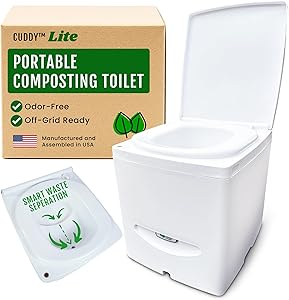
- Liquid Diversion: Two-plate drop-zone cover
- Power Source: 9V battery for LED indicator (not included)
- Installation: Flush-fit or freestanding
- Maintenance: Removable solids bin, bag-compatible
The Cuddy Lite Portable Compost Toilet is ingeniously designed for mobile living, making it an excellent choice for campervans, RVs, boats, and tiny homes where space and independence are paramount. Its compact footprint allows for flexible installation, either flush-fit or freestanding, adapting seamlessly to tight off-grid environments. The core of its design is the innovative two-plate drop-zone cover, which efficiently separates liquids and solids, ensuring superior hygiene and preventing splashes or spills during use.
This toilet champions hassle-free operation by requiring no plumbing, chemicals, or electricity, making it truly self-sufficient for remote setups. A unique LED full indicator, powered by a standard 9V battery, conveniently alerts you when the liquid container needs emptying, preventing overflows and messes. Maintenance is also simplified with a removable solids bin compatible with liners for effortless disposal. Cuddy Lite delivers a robust, easy-to-clean, and truly portable composting solution for independent living.
- Pros:
- Compact and versatile installation
- Effective liquid-diverting system
- LED full indicator for liquids
- Cons:
- 9V battery for LED not included
- Solids cover mechanism might need getting used to
6. OGO™ Compost Toilet – Electric Mixing

- Build Location: Ohio, USA
- Max Load Capacity: 550 lbs
- Solid Waste Capacity: 25-30 uses
- Liquid Capacity: 2.4 gallons
The OGO™ Compost Toilet stands out as a premium, modern solution for RVs, tiny houses, vans, and boats, offering a sophisticated and hygienic off-grid experience. Manufactured and assembled in Ohio, USA, it boasts a robust build quality capable of supporting up to 550 lbs, ensuring exceptional durability and stability. Its primary feature is an electric mixing system for solids, combined with efficient urine separation, which collectively eliminates odors without requiring chemicals or black tanks.
The design prioritizes hygiene and convenience, featuring removable solids bins and urine bottles for easy emptying and cleaning. With a generous capacity for 25-30 solid uses and a 2.4-gallon liquid bottle, it minimizes the frequency of maintenance. Beyond functionality, the OGO™ presents a sleek, modern aesthetic that seamlessly integrates into various living spaces. It’s a top-tier choice for those seeking a high-capacity, odor-free, and well-engineered composting toilet for their independent lifestyle.
- Pros:
- Electric mixing for solids
- High load capacity (550 lbs)
- Large capacity for solids and liquids
- Cons:
- Requires electricity for mixing
- Higher cost than manual models
7. NOMAD by OGO Portable Compost Toilet
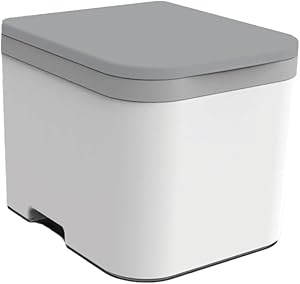
- Power Requirement: No electric, no plumbing
- Waste System: Urine diverting, uses 8-gallon bags
- Ideal For: Truck campers, primitive camping, boating
- Build: Made in the USA
The NOMAD by OGO Portable Compost Toilet is the quintessential solution for true adventurers, designed for rugged, off-grid environments where simplicity and durability are paramount. This no-frills, no-fuss composting toilet requires no electricity, plumbing, or wiring, making it perfect for truck campers, primitive camping, hunting blinds, or small boats. Its proven urine-diverting system is highly effective at preventing odors, eliminating the need for chemicals, black tanks, or frequent dump station visits, thus extending your time outdoors.
Extremely portable and space-saving, the NOMAD’s compact footprint fits easily into various vehicles and temporary shelters, and its lightweight design ensures easy transport. A significant advantage is its simple bag system, which accommodates widely available 8-gallon bags, facilitating quick, hygienic cleanup and fast campsite turnaround. Made with durable materials in the USA, this low-maintenance toilet is built to withstand harsh outdoor conditions, offering reliable sanitation for day-trippers and weekend warriors alike.
- Pros:
- Completely off-grid capable (no power/plumbing)
- Effective odor-free urine diverting system
- Extremely portable and space-saving
- Cons:
- Less sophisticated than electric models
- Manual handling of waste bags
How to Choose Composting Toilets for Off-Grid Living
Choosing the right composting toilet for your off-grid setup is a pivotal decision that significantly impacts your comfort, hygiene, and environmental footprint. Unlike conventional flush toilets that rely on vast amounts of water and complex septic systems, composting toilets offer a sustainable, waterless alternative by separating solid and liquid waste, facilitating a natural decomposition process. This guide delves into the essential factors to consider, ensuring you select a composting toilet that perfectly aligns with your off-grid lifestyle, whether you’re in a tiny house, RV, van, or cabin.
Understanding Composting Toilets
Before diving into selection criteria, it’s important to grasp the fundamental principles of composting toilets. These systems manage human waste by diverting urine from solids. This separation is crucial because mixing urine and feces creates anaerobic conditions that lead to unpleasant odors. Once separated, solids are typically mixed with a carbon-rich bulking agent like peat moss, coconut coir, or sawdust, which absorbs moisture, provides carbon for aerobic decomposition, and helps control odors. Liquids are either collected in a container for later disposal or safely diverted to a gray water system.
Types of Composting Toilets
There are two primary categories of composting toilets:
- Self-Contained Composting Toilets: These units integrate the composting chamber directly beneath the toilet seat. They are generally compact and suitable for smaller spaces like RVs, vans, and tiny homes. Waste is deposited into a chamber where bulking material is added, and often a hand crank or electric agitator mixes the contents to promote decomposition. Once the chamber is full, it’s typically emptied into an external composting bin or a designated disposal site.
- Central (Split) Composting Toilets: These systems separate the toilet fixture from the composting chamber. The toilet itself is a simple pedestal, and waste drops into a larger composting unit located in a basement, crawlspace, or outside. This allows for much larger composting capacities, requiring less frequent emptying, making them ideal for cabins or larger off-grid homes with higher usage.
Key Factors to Consider When Choosing
The “best” composting toilet isn’t a one-size-fits-all solution. Your ideal choice depends on several specific needs and constraints of your off-grid environment.
1. Capacity and Usage
Consider how many people will be using the toilet and how often. Capacity is usually measured in “uses” or by the volume of the waste containers. Smaller, self-contained units typically need to be emptied more frequently (e.g., every few days to a few weeks for liquids, every few weeks to months for solids). Larger central units can go for months or even a year before needing to be emptied. Overestimating your needs might lead to an unnecessarily large unit, while underestimating will mean frequent, inconvenient emptying.
2. Size and Portability
For RVs, vans, and smaller tiny homes, space is a premium. Look for compact, self-contained models that fit your available footprint. Dimensions (height, width, depth) are critical, especially if you have custom cabinetry or limited clearance. If you plan to move the toilet between locations or store it away when not in use, a lightweight and portable design is essential.
3. Odor Control
This is often the biggest concern for new users. Effective odor control is paramount for comfortable off-grid living. Look for features such as:
- Urine Diversion: A well-designed urine diversion system is the first line of defense against odors.
- Bulking Material: The right bulking material (coconut coir, peat moss, wood shavings) is essential for absorbing moisture and facilitating aerobic decomposition.
- Ventilation System: Many composting toilets include a small 12V fan that continuously pulls air through the solids chamber and vents it outside, creating negative pressure that prevents odors from escaping into your living space. This is highly recommended for permanent installations.
- Tight Seals: Ensure the toilet lid and waste containers have airtight seals to prevent any potential smells.
4. Power Requirements
While many composting toilets operate without electricity, some models incorporate features that require power:
- Ventilation Fans: Most continuous ventilation systems use a small 12V fan, which can be easily powered by a solar setup or vehicle battery.
- Electric Agitators: Some advanced self-contained units have electric agitators to mix solids, which also require a power source.
- Urine Level Sensors: A convenient feature that alerts you when the liquid tank is full.
If your off-grid power is limited, opt for fully manual, non-electric models.
5. Ease of Maintenance and Emptying
Consider how easy it is to empty both the liquid and solid waste containers. Look for:
- Accessible Containers: Containers should be easy to remove, transport, and clean without messy spills.
- Lining Options: Some models allow for compostable bags in the solids bin, simplifying disposal.
- Material Cleanliness: Smooth, non-porous surfaces are easier to wipe down and keep hygienic.
6. Durability and Material Quality
Off-grid environments can be tough on equipment. Choose a toilet made from robust, weather-resistant materials like durable plastics (e.g., ABS) that can withstand temperature fluctuations and general wear and tear. A sturdy build also ensures a high weight capacity and longevity.
7. Price and Value
Composting toilets range widely in price, from a few hundred dollars for basic portable models to over a thousand for advanced, large-capacity units. Consider your budget, but also evaluate the long-term value in terms of durability, features, and ease of use. Investing in a higher-quality unit can save you headaches and replacement costs down the line.
Installation and Use Considerations
Ventilation
For optimal odor control, especially with self-contained units, external ventilation is highly recommended. This typically involves a small hose leading from the toilet’s solids chamber to an exterior vent, often with a fan, creating a continuous draw of air. Proper ventilation also aids in the evaporation of liquids from the solids, speeding up the composting process.
Disposal of Waste
Understanding local regulations regarding human waste disposal is crucial. Liquid waste (urine) can often be diluted and safely used as fertilizer for non-edible plants or dispersed into a designated soak-away pit, provided it meets local guidelines. Composted solid waste, when fully broken down, resembles soil and can often be buried or added to a separate long-term composting pile for further decomposition. Never use partially composted human waste on food crops.
Bulking Material
Always keep a supply of bulking material on hand. After each solid use, a scoop or two should be added to cover the waste. This helps absorb moisture, introduces carbon, and prevents flies. Common materials include coco coir (expandable bricks), peat moss, or fine sawdust. Avoid wood pellets or chips, as they don’t break down quickly enough and can absorb too much liquid.
Environmental Benefits
Choosing a composting toilet offers significant environmental advantages:
- Water Conservation: Saves thousands of gallons of fresh water annually compared to flush toilets.
- Reduced Pollution: Eliminates the need for septic systems or black water tanks, reducing nutrient pollution in groundwater and surface water.
- Resource Recovery: Turns waste into a valuable soil amendment, completing a natural cycle.
- Energy Savings: Many models require little to no electricity, reducing your energy footprint.
Conclusion
Selecting the best composting toilet for your off-grid setup is a mindful investment in sustainable living. By carefully evaluating factors like capacity, size, odor control mechanisms, power requirements, and ease of maintenance, you can find a system that not only meets your practical needs but also enhances your overall off-grid experience. Embrace the freedom and eco-consciousness that these innovative toilets offer, ensuring comfort and responsible waste management wherever your adventures lead.