Best 12v Batteries For RV of 2026
Choosing the best 12V batteries for your RV is essential for reliable off-grid adventures and seamless power management. Whether you prioritize lightweight lithium efficiency or the rugged dependability of AGM, the right choice ensures your appliances stay running. Our guide reviews top-rated options to help you maximize energy density and longevity for your next road trip.
1. ECO-WORTHY 12V 100Ah LiFePO4 Lithium Battery

- Capacity: 100Ah (1280Wh)
- Weight: 23.15 lbs
- Monitoring: Bluetooth 5.1 Real-Time App
- Protection: Built-in 100A BMS with Low-Temp Cut-off
The ECO-WORTHY 12V 100Ah lithium battery is an outstanding choice for modern RVers who value data. With integrated Bluetooth 5.1, you can monitor voltage and remaining life directly from your smartphone, ensuring you never face unexpected power loss during off-grid stays. Its Group 24 size makes it a perfect drop-in replacement for traditional batteries.
The automotive-grade LiFePO4 cells provide a stable energy density that far exceeds lead-acid alternatives. Furthermore, the specialized low-temperature protection ensures the battery remains safe during harsh winter charging. This lightweight unit effectively reduces your vehicle’s weight while offering a reliable three-year warranty for peace of mind.
- Pros:
- Real-time Bluetooth app monitoring
- Ultra-lightweight Group 24 design
- Integrated low-temperature charging protection
- Cons:
- Limited 3-year warranty period
- Requires smartphone for full status
2. Redodo 12V 165Ah LiFePO4 Lithium Battery

- Capacity: 165Ah (2112Wh)
- BMS: 165A Continuous Output
- Lifespan: 10-Year Service Life
- Size: BCI Group 31 Case
The Redodo 12V 165Ah battery offers market-leading power density within a compact Group 31 footprint. Delivering a massive 2112Wh of energy, it provides 3.5 times the energy of a standard 100Ah lead-acid battery. This makes it ideal for powering high-demand RV appliances like air conditioners or microwaves without needing multiple bulky units.
This battery is engineered with a proprietary structure for enhanced heat dissipation and includes over 20 BMS safety protections. The smart Bluetooth monitoring system allows for remote energy management, ensuring total control over your SOC and voltage. It is a maintenance-free, lightweight solution designed to last for over a decade.
- Pros:
- High 165A continuous discharge rate
- Massive capacity in Group 31 size
- Zero maintenance with 10-year life
- Cons:
- Larger footprint than Group 24
- Higher initial investment cost
3. LiTime 2 Pack 12V 100Ah RV Lithium Battery

- Cycle Life: 4000+ Cycles (100% DOD)
- Total Energy: 2.56kWh (Per 2-Pack)
- Cells: Automotive Grade-A LiFePO4
- Expandability: Up to 4P4S Configuration
This LiTime 2-pack provides a robust foundation for an expandable RV power system. Each 100Ah battery matches the BCI Group 24 universal fit, allowing for a seamless transition from heavy AGM setups to efficient lithium. With 4000+ cycles at 100% depth of discharge, these batteries offer significantly better long-term value.
The Grade-A cells and integrated BMS ensure stability across a 10-year expected lifespan. Because the system is highly expandable, you can scale your energy storage up to 20.48kWh as your power needs grow. This pack is particularly effective for off-grid enthusiasts who require high energy density and lightweight reliability for solar-integrated setups.
- Pros:
- Exceptional cycle life and durability
- Highly expandable for large systems
- Lightweight automotive-grade cells
- Cons:
- No built-in Bluetooth monitoring
- Requires more space for two units
4. Renogy Deep Cycle AGM 12V 100Ah Battery

- Discharge Current: 1100A Max (5 Seconds)
- Self-Discharge: Less than 3% Monthly
- Temp Range: -4°F to 140°F
- Chemistry: Sealed Maintenance-Free AGM
The Renogy Deep Cycle AGM battery is a trusted, reliable power source with over 230,000 units sold globally. Unlike lithium batteries, this AGM unit offers exceptional chemical stability and requires no complex internal troubleshooting. It is specifically designed to perform in extreme temperatures, making it a dependable choice for harsh winter or desert camping.
With a massive 1100A max discharge current, it can easily handle high-surge appliances like microwaves and coffee makers. The low self-discharge rate means you won’t need to recharge it frequently during periods of storage. This battery is an ideal, cost-effective solution for RVers who prefer a “set it and forget it” maintenance-free power system.
- Pros:
- Outstanding extreme temperature performance
- High surge current for heavy appliances
- Extremely low self-discharge rate
- Cons:
- Much heavier than lithium options
- Lower usable depth of discharge
5. Interstate 12V 70Ah Dual Purpose AGM Battery
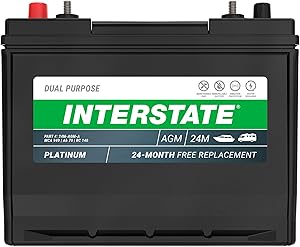
- Cranking Amps: 750 CCA
- Capacity: 70Ah (Group 24)
- Lifespan: 2x-3x longer than alloy AGM
- Design: Pure Non-Alloy Lead Plates
Interstate Batteries brings 70 years of reliability with this dual-purpose AGM model. It serves a unique role by providing high-cranking power to start your engine while offering deep-cycle capabilities to power appliances and accessories. The pure lead technology ensures a service life up to three times longer than conventional flooded batteries.
Built “Interstate tough,” this battery handles rugged road conditions and vibrations with ease. It recharges faster than standard alloy AGM batteries, ensuring you spend more time enjoying your trip and less time waiting for power. It is a dependable 2-in-1 solution for RVers who need a single battery to handle both starting and house loads.
- Pros:
- Dual-purpose starting and deep cycle
- Fast recharging with pure lead plates
- Extremely rugged construction
- Cons:
- Lower 70Ah capacity
- Heavier than lithium equivalents
6. ExpertPower 12V 20Ah Lithium LiFePO4 Battery

- Cycle Life: 2500-7000 Cycles
- BMS: Proprietary Built-in System
- Experience: 36 Years in Battery Industry
- Durability: Tested against fire and impact
ExpertPower’s 12V 20Ah lithium battery is a compact powerhouse trusted by industry professionals. Utilizing state-of-the-art prismatic cells, it delivers between 2500 and 7000 cycles, far outlasting standard batteries. Its proprietary BMS is perfectly tuned to the cells to prevent over-discharge and overheating, ensuring maximum safety and longevity for small-scale RV setups.
This battery is built to be resilient, having undergone rigorous testing for high-impact and short-circuit damage. It is an excellent choice for overlanding or as a secondary battery for specific low-draw accessories. Backed by world-class technical support, it offers a seamless purchasing experience for those transitioning to high-quality lithium technology in smaller applications.
- Pros:
- Highly resilient prismatic cell design
- Extensive cycle life for longevity
- Compact for small space applications
- Cons:
- Low 20Ah capacity for main house power
- Not suitable for heavy appliances
7. OPTIMA D34M BlueTop High Performance AGM

- Cranking Power: 750 CCA / 870 MCA
- Technology: SPIRALCELL Pure Lead
- Reserve Capacity: 120 Minutes
- Vibration Resistance: 15x Standard Batteries
The OPTIMA BlueTop D34M is renowned for its unique SPIRALCELL technology, which uses 99.99% pure lead to deliver superior starting power. This dual-purpose battery excels in both deep-cycle and starting applications, making it incredibly versatile for RV and marine use. Its high resistance to vibration—15 times more than standard batteries—ensures it survives the roughest terrains.
This maintenance-free battery charges quickly and provides consistent performance even in bad weather. The dual stainless steel stud posts allow for easy accessory connections, while the sealed design allows for flexible mounting options. It is a premium choice for RVers who need reliable starting power and a durable house battery in one high-performance package.
- Pros:
- Superior vibration resistance for off-roading
- Consistent performance in bad weather
- Fast charging and maintenance-free
- Cons:
- Relatively low 55Ah capacity
- Heavy weight for its size
How to Choose 12v Batteries For Rv
Understanding Battery Chemistry
When selecting a 12V battery for your RV, the first decision is the chemistry. Historically, flooded lead-acid batteries were the standard. However, most modern RVers now choose between Absorbent Glass Mat (AGM) and Lithium Iron Phosphate (LiFePO4). AGM batteries are sealed, maintenance-free, and handle vibrations well, making them a safe choice for traditional setups. On the other hand, LiFePO4 batteries are the gold standard for efficiency. They are significantly lighter, charge faster, and offer a much deeper depth of discharge, allowing you to use nearly 100% of the stored energy without damaging the cells.
Capacity and Power Requirements
Battery capacity is measured in Amp Hours (Ah). To choose the right size, you must calculate your daily energy consumption. List all your appliances—lights, water pumps, refrigerators, and fans—and estimate how many hours each runs daily. For example, a 100Ah lithium battery can theoretically provide 1 amp for 100 hours or 10 amps for 10 hours. If you frequently use high-draw items like microwaves or coffee makers via an inverter, you should look for batteries with a high continuous discharge rating, often dictated by the Battery Management System (BMS).
Depth of Discharge (DOD)
Not all amp hours are equal. Lead-acid and AGM batteries should generally not be discharged below 50% to avoid permanent damage and shortened lifespans. This means a 100Ah AGM battery only provides 50Ah of usable power. Lithium batteries can routinely be discharged to 80% or even 100%, effectively doubling your usable power for the same rated capacity. When comparing prices, always factor in the usable capacity rather than just the number on the label.
The Importance of the Battery Management System (BMS)
If you choose lithium, the BMS is the most critical component. It acts as the “brain” of the battery, protecting the cells from overcharging, over-discharging, and short circuits. Premium batteries also include low-temperature cut-off. Lithium batteries cannot be charged when internal temperatures drop below freezing (32°F); doing so can cause permanent plating of the cells. A high-quality BMS will detect these temperatures and stop the charging process, protecting your investment during winter travels.
Weight and Space Constraints
Weight is a major factor in RV fuel efficiency and Gross Vehicle Weight Rating (GVWR). A standard 100Ah AGM battery can weigh between 60 and 70 pounds. In contrast, a 100Ah lithium battery usually weighs around 25 to 30 pounds. If you are building a large battery bank (e.g., 400Ah), choosing lithium can save you over 150 pounds of weight. Additionally, consider the BCI Group Size (such as Group 24, 27, or 31) to ensure the battery fits into your existing battery box or tray without modifications.
Cycle Life and Long-Term Value
While lithium batteries have a higher upfront cost, their cycle life makes them cheaper over time. A standard AGM battery might last for 300 to 500 cycles, whereas a quality LiFePO4 battery can last for 3,000 to 5,000 cycles. If you use your RV frequently, the lithium battery will outlast several sets of AGM batteries, eventually paying for itself through longevity and reduced replacement labor.
Environmental Factors and Temperature Performance
Consider where you do most of your camping. If you are a winter warrior, AGM batteries generally perform better in sub-freezing discharge conditions than standard lithium batteries. However, some high-end lithium batteries now come with internal heating pads to overcome this limitation. For desert campers, ensure your battery has high-temperature protection, as excessive heat is the primary enemy of all battery chemistries and can lead to premature failure.
Charging Infrastructure
Finally, ensure your RV’s charging system is compatible with your chosen battery. Lithium batteries require a specific charging profile (constant current/constant voltage) that differs from the multi-stage charging used for lead-acid. If your RV’s converter is older, you may need to upgrade it to a lithium-compatible model to ensure your new batteries are fully and safely charged. Solar controllers and DC-to-DC chargers should also be adjustable to match the manufacturer’s recommended voltages.