Best 30-Amp RV Generators of 2025
A 30-amp RV generator is an essential companion for many travelers. Choosing the right generator isn’t just about raw power; it’s about finding a balance of fuel efficiency, noise level, portability, and safety features that align with your specific travel style. This guide will help demystify the options, ensuring you select a generator that keeps your RV life running smoothly, comfortably, and powered up for every journey ahead.
1. Westinghouse 4000W Dual Fuel Portable Inverter Generator

- Peak/Rated Watts: 4000W / 3300W
- Fuel Type: Dual Fuel (Gas & Propane)
- Noise Level: As low as 52 dBA
- Outlets: 120V Duplex, 30A RV (TT-30R), 2x USB
The Westinghouse 4000 Peak Watt Dual Fuel Inverter Generator stands out as a top-tier choice for RV enthusiasts seeking versatile and reliable power. Its dual-fuel capability, allowing it to run on either gasoline or propane. With 4000 peak watts and 3300 running watts, it delivers ample power to keep your essential RV appliances, including air conditioners, refrigerators, and entertainment systems, running smoothly. The inverter technology ensures clean, stable power (less than 3% THD).
Operating at a remarkably low 52 dBA, this generator is exceptionally quiet. The inclusion of an RV-ready TT-30R 30 Amp outlet means direct plug-and-play for most RVs, simplifying your setup. An integrated LED Data Center provides real-time information on fuel level, power output, remaining run time, and voltage. Additionally, its “Economy Mode” optimizes fuel efficiency, extending run times up to 7 hours on a 1.69-gallon gas tank. Safety is also paramount, with automatic low oil and carbon monoxide (CO) shutdown features.
- Pros:
- Dual fuel for flexibility
- Extremely quiet operation
- RV-ready TT-30R outlet
- Cons:
- Relatively heavy for transport
- Initial setup required
2. ERAYAK 4500W Dual-Fuel Portable Inverter Generator

- Peak/Rated Watts: 4500W / 3500W (Gas)
- Fuel Type: Dual Fuel (Gas & Propane) with Auto Switch
- Noise Level: 58 dBA (23ft @ 25% load)
- Weight: 54 pounds
The ERAYAK 4500PD Dual-Fuel Portable Inverter Generator offers an impressive blend of power, portability, and smart features. Its dual-fuel capability provides maximum flexibility, allowing you to run on gasoline (4500W peak / 3500W rated) or propane (4050W peak / 3150W rated). A standout feature is the seamless fuel switching, which automatically transitions to gasoline if propane runs out. Weighing just 54 pounds and boasting a compact design, this generator is incredibly easy to transport and store, setting it apart as one of the most portable models in its class, perfect for those with limited space.
Delivering pure sine wave technology with ultra-low THD (0.2%~1.2%), the Erayak 4500PD provides clean and reliable power. It’s RV-ready with a 30A (L5-30P) RV outlet, alongside two 120V/20A outlets and versatile USB-A and USB-C ports for all your charging needs. Its super quiet operation at just 58 dBA ensures your adventures remain peaceful. The Electronic Speed Control (ESC) Mode further optimizes fuel efficiency.
- Pros:
- Dual fuel with automatic switching
- Extremely lightweight and compact
- Clean power for sensitive electronics
- Cons:
- Propane output slightly lower
- 58 dBA is not the absolute quietest
3. GROWATT INFINITY 2000 Portable Power Station

- Battery Capacity: 2048Wh (expandable to 6kWh)
- AC Output: 2400W (up to 3400W with Watt+)
- Charging Time: 1.6 hrs (AC), 1.5 hrs (AC+Solar)
- RV Ports: TT-30 and 30A Anderson ports
The GROWATT INFINITY 2000 Portable Power Station reimagines RV power. With a robust 2048Wh LiFePO4 battery, it provides substantial energy for extended trips, and its capacity can be impressively expanded up to 6kWh with additional batteries, perfect for 3-7 day road trips or emergency home backup. This unit excels in speed, fully recharging in just 1.6 hours via AC or a rapid 1.5 hours when combining AC and solar input. Its 2400W AC output, boostable to 3400W with Watt+ technology, and 15 versatile ports, including dedicated TT-30 and 30A Anderson ports.
Designed with outdoor adventurers in mind, the INFINITY 2000 features exclusive Cold Start technology. For home use, its 15ms EPS (Emergency Power Supply) switchover provides uninterrupted power for essential devices during outages, protecting sensitive electronics. Unlike fuel-powered generators, it operates silently and produces zero emissions, ideal for quiet campsites and indoor use. Built with EV-grade LiFePO4 battery cells, it promises a decade-long lifespan and superior safety, backed by Growatt’s reputable quality and customer service, offering a clean, dependable, and highly adaptable power solution for any scenario.
- Pros:
- Expandable battery capacity up to 6kWh
- Ultra-fast AC and solar charging
- Silent, zero-emission operation
- Cons:
- Higher upfront cost than gas generators
- Limited by battery capacity without recharging
4. PowerSmart 3600-Watt Portable Inverter Generator

- Peak/Rated Watts: 3600W / 3200W
- Weight: 50 pounds
- Noise Level: 59 dBA (23ft @ 25% load)
- Run Time: 4.5 hours (50% load)
The PowerSmart 3600-Watt Portable Inverter Generator delivers a compelling blend of power, portability, and quiet operation. With 3600 starting watts and 3200 running watts, it provides clean power (less than 3% THD). Weighing in at a mere 50 pounds and featuring a convenient built-in handle, this generator is exceptionally lightweight and easy to carry, making it ideal for camping trips, tailgating, or moving it around your RV site. Its compact design further enhances its portability, allowing for easy storage in tight spaces.
Operating at a quiet 59 dBA from 23 feet at 25% load, the PowerSmart generator won’t disrupt the tranquility of your outdoor surroundings or bother your neighbors. The control panel is well-equipped with two 120V 20A NEMA 5-20R receptacles, one dedicated 120V 30A RV receptacle, a 12V DC outlet, and two 5V USB ports. Features like Eco Mode optimize fuel consumption for extended run times, while Low Oil Shutdown and Overload Reset protect the generator from potential damage. Additionally, it boasts parallel ports, allowing you to double your power output by connecting two units.
- Pros:
- Extremely lightweight and portable
- Produces clean power for sensitive electronics
- Dedicated 30-amp RV outlet
- Cons:
- Shorter run time at 50% load (4.5 hours)
- Not dual fuel capable
5. Westinghouse 4650W Gas Powered Portable Generator

- Peak/Rated Watts: 4650W / 3600W
- Fuel Tank Capacity: 4 Gallons
- Run Time: Up to 14 hours per tank
- Outlets: 120V Duplex, 30A RV (TT-30R), 30A (L5-30R)
The Westinghouse 4650 Peak Watt Portable Generator is a robust and dependable power solution designed to handle significant RV and home backup demands. Delivering a substantial 4650 peak watts and 3600 running watts, this gas-powered unit is strong enough to manage multiple appliances simultaneously. Its generous 4-gallon fuel tank allows for an impressive run time of up to 14 hours per tank, minimizing the need for frequent refueling and providing extended power during longer boondocking trips or power outages. While not an inverter generator, its raw power and endurance are key advantages for those prioritizing brute force over extreme quietness or precise clean power for sensitive electronics.
The generator comes equipped with a versatile outlet panel, featuring two 120V household duplex receptacles, one RV-Ready TT-30R 30 Amp receptacle, and an L5-30R 30 Amp twist-lock receptacle. All outlets are protected with rubber covers for enhanced safety. Powered by a durable 212cc Westinghouse 4-stroke OHV engine with a cast iron sleeve, this unit is built for longevity and reliability. Safety features include automatic low oil shutdown to prevent engine damage and a carbon monoxide (CO) sensor that automatically shuts down the generator if CO levels become unsafe. It’s a plug-and-play unit, coming with all essential accessories to get you started quickly.
- Pros:
- High peak and running wattage
- Exceptional run time up to 14 hours
- Multiple 30-amp RV and twist-lock outlets
- Cons:
- Louder operation than inverter models
- Not ideal for sensitive electronics (higher THD
6. Generac 3300-Watt Portable Inverter Generator

- Running Watts: 3300W
- Technology: TruePower (<3% THD), PowerRush Advance
- Safety: COsense Technology, Low Oil/Overload LEDs
- Features: Eco Mode, USB Ports, Parallel Ready
The Generac 7153 GP3300i Portable Inverter Generator is an excellent choice for RVers and campers who demand clean, stable power in a lightweight and compact package. With 3300 running watts, it’s capable of powering essential RV appliances and electronics without a hitch. Generac’s TruePower Technology ensures less than 3% Total Harmonic Distortion (THD). A standout feature is the PowerRush Advance Technology, which offers over 50 percent more starting capacity, allowing you to confidently start high-demand motor-driven equipment like air conditioners without overloading the generator.
Designed for convenience and safety, this inverter generator features an Economy Mode that automatically adjusts engine speed to match the load, significantly reducing fuel consumption and extending run times. Generac also integrates its COsense Technology, which automatically shuts down the generator if dangerous levels of carbon monoxide are detected. The control panel is user-friendly, with LED indicators for low oil, overload, and ready-to-use status, as well as two convenient USB ports for direct device charging. Its parallel-ready capability allows you to link two GP3300i units for double the power.
- Pros:
- TruePower Technology for clean, stable electricity
- PowerRush Advance for superior starting capacity
- Fuel-efficient Economy Mode
- Cons:
- Gas-powered only, no dual fuel
- 3300 running watts might be limiting for larger RVs
7. WEN GN5600 5600-Watt Portable Generator
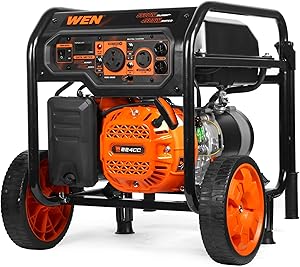
- Peak/Running Watts: 5600W / 4500W
- Engine: 224cc, 4-stroke
- Fuel Tank: 4.3 Gallons
- Run Time: Up to 12.5 hours (half load)
- Outlets: 120V 5-20R, 30A RV (TT-30R), 30A (NEMA L5-30R)
The WEN GN5600 5600-Watt Portable Generator is a powerhouse designed for those who need substantial, reliable electricity for their RVs, job sites, or home backup. With an impressive 5600 starting watts and 4500 running watts, this unit can easily handle demanding loads, including multiple large appliances and power tools simultaneously. Its 224cc 4-stroke engine ensures consistent performance and durability. A standout feature is the large 4.3-gallon fuel tank, which provides an extended run time of up to 12.5 hours at half load. While it’s a conventional generator and not an inverter, its high power output and robust construction make it a strong contender for applications where raw power is a priority.
This generator is exceptionally versatile with its comprehensive panel, featuring two standard 120V 5-20R 20-amp outlets, one RV-ready 120V 30-amp TT-30R outlet, and one transfer-switch-ready 120V 30-amp NEMA L5-30R twist-lock receptacle. This array of outlets ensures compatibility with virtually any RV setup or direct connection to a home’s transfer switch for emergency power. Mobility is enhanced by the included wheel and handle kit.
- Pros:
- Very high peak and running wattage
- Long run time with large fuel tank
- Multiple RV and transfer-switch-ready outlets
- Cons:
- Not an inverter generator (higher THD)
- Louder operation compared to inverter models
How to Choose 30-Amp RV Generators
A reliable generator is a cornerstone of comfortable RV travel, especially for adventurers who frequently venture off-grid or enjoy the freedom of boondocking. While there’s a vast array of generators on the market, a 30-amp RV generator strikes an optimal balance for many, offering enough power to run essential appliances without being excessively large or fuel-hungry. This comprehensive guide will walk you through the critical factors to consider, ensuring you make an informed decision that perfectly matches your RV lifestyle and power needs.
Understanding Your RV’s Power Needs
Before diving into generator specifications, it’s crucial to understand what “30-amp” means for your RV. Most smaller to mid-sized RVs are equipped with a 30-amp electrical service, which typically provides 3,600 watts of power (30 amps x 120 volts). This wattage is usually sufficient to run one large appliance, like an air conditioner (AC), along with several smaller ones such as lights, a refrigerator, and a water pump. Larger RVs often feature 50-amp service, which requires a more powerful generator. However, many 50-amp RVs can still operate on a 30-amp generator by using an adapter, though you’ll need to carefully manage your power consumption to avoid tripping breakers.
To determine your exact power requirements, list all the appliances you anticipate running simultaneously. Pay close attention to their “starting watts” (the brief surge of power needed to start motor-driven appliances like an AC or microwave) and their “running watts” (the continuous power draw). Your generator’s peak/starting wattage should exceed the highest combined starting watts of your appliances, while its rated/running wattage should comfortably cover your continuous load. Overestimating slightly is always safer than underestimating, providing a buffer for unexpected needs.
Types of 30-Amp RV Generators
There are generally two main types of generators suitable for RV use: conventional and inverter generators. Each has distinct advantages and disadvantages.
Conventional Generators
These are the traditional generators you might be familiar with. They are often more affordable and can provide a lot of raw power for their size. However, they tend to be louder and produce “dirty” power, meaning the electricity they generate has a higher Total Harmonic Distortion (THD). This higher THD can potentially harm sensitive electronics like laptops, smartphones, and modern RV control panels. If your primary goal is to run robust appliances like an air compressor or power tools, and you’re not concerned about noise or sensitive electronics, a conventional generator might suffice. They are less common for RV primary use due to these drawbacks but some still offer high wattage and affordability.
Inverter Generators
Inverter generators are the preferred choice for most RVers. They produce “clean” sine wave power with very low THD (typically less than 3%), making them perfectly safe for all your delicate electronics. They are also significantly quieter, often operating at noise levels comparable to a normal conversation, which is crucial for enjoying peaceful campsites and adhering to noise regulations. While generally more expensive than conventional generators, their fuel efficiency, quieter operation, and clean power output often justify the investment for RV use. Many also come with features like “Eco Mode” which adjusts engine speed to load, further saving fuel and reducing noise.
Portable Power Stations (Solar Generators)
While not traditional fuel generators, portable power stations, often called “solar generators” when paired with solar panels, are gaining immense popularity among RVers. These units store energy in large batteries (typically LiFePO4 for durability and longevity) and provide AC power through an inverter. They are completely silent, produce zero emissions, and require no fuel (beyond recharging). Their advantages include being suitable for indoor use, minimal maintenance, and the ability to recharge via solar, AC outlets, or your RV’s 12V system. The main drawbacks are their higher upfront cost and finite battery capacity, though many are expandable and can be continuously recharged with solar, offering unlimited “fuel” during daylight hours. For those prioritizing peace, quiet, and environmental friendliness, a robust power station with a 30-amp RV output port can be an excellent choice.
Key Features to Consider
When comparing 30-amp RV generators, several features can significantly impact your experience:
Power Output (Watts)
As discussed, ensure the generator’s running watts meet your continuous needs and its starting watts can handle initial surges. A 30-amp RV typically needs at least 3000-3600 running watts to operate its AC effectively, along with other small appliances. Generators listed as “30-amp RV ready” will almost always have a TT-30R outlet and sufficient power.
Fuel Type and Efficiency
Gasoline: Most common, widely available, but can be less efficient and produce more emissions. Run time per tank is an important metric.
Propane (LPG): Offers cleaner burning, longer storage life, and is often readily available at RV parks. Dual-fuel generators that run on both gasoline and propane offer the best flexibility.
Diesel: Less common for portable RV generators, usually found in larger, built-in units. Very fuel-efficient and durable but heavier and more expensive.
Electric (Battery): Silent, zero emissions, and rechargeability. Great for environmental concerns and quiet zones, but limited by battery capacity.
Look for “Economy Mode” or “Smart Throttle” features in inverter generators, as these adjust engine speed to load, significantly reducing fuel consumption and noise.
Noise Level (dBA)
This is paramount for RVers. Measured in decibels (dBA) at a certain distance (e.g., 23 feet), lower numbers mean quieter operation. Inverter generators typically range from 50-60 dBA, which is quiet enough for most campgrounds. Conventional generators can easily exceed 70 dBA, which can be very disruptive.
Portability and Weight
Consider how often you’ll be moving the generator. Lighter models (under 70 lbs) with built-in handles or wheel kits are much easier to manage. If it’s heavy, assess if you need assistance or specific lifting equipment.
Outlets and Connectivity
Ensure the generator has the appropriate RV-ready 30-amp outlet (TT-30R). Additional 120V household outlets, USB ports, and a 12V DC outlet are highly beneficial for charging various devices. Parallel capability, which allows you to connect two smaller generators for combined power, adds flexibility.
Safety Features
Low Oil Shutdown: Protects the engine from damage by automatically turning off if oil levels drop too low.
Overload Protection: Prevents damage to the generator and connected appliances by shutting down if the load exceeds its capacity.
Carbon Monoxide (CO) Sensor: A critical safety feature that automatically shuts off the generator if dangerous levels of CO are detected, especially important in outdoor living spaces.
Starting Mechanism
Recoil Start: Manual pull cord, reliable but can be strenuous.
Electric Start: Push-button start, very convenient.
Remote Start: Allows you to start the generator from a distance with a key fob, a highly convenient feature for RV life.
Maintenance and Warranty
Just like your RV, generators require regular maintenance. Check oil levels, spark plugs, and air filters. Look for generators with clear maintenance schedules and easily accessible parts. A good warranty (typically 2-3 years for portable generators) and a reliable customer service network are important for peace of mind, ensuring support if issues arise.
Installation and Operation Tips
- Placement: Always operate your generator outdoors in a well-ventilated area, far from your RV windows and vents, to prevent carbon monoxide poisoning.
- Grounding: Follow manufacturer instructions for proper grounding to prevent electrical shock.
- Fuel Storage: Store fuel in approved containers away from living spaces and direct sunlight.
- Break-in Period: Adhere to the manufacturer’s recommended break-in procedure for new generators to ensure optimal performance and longevity.
- Adapters: If your RV has a 50-amp service, you can use a 30-amp to 50-amp adapter, but remember you are still limited to the 30-amp generator’s output.
Conclusion
Choosing the best 30-amp RV generator is an investment in your comfort and freedom on the road. By carefully considering your power needs, understanding the differences between conventional, inverter, and power station options, and evaluating key features like noise level, fuel type, and safety, you can select a unit that reliably powers your adventures. Whether you prioritize quiet operation, dual-fuel versatility, or sheer power output, there’s a perfect generator out there to keep your RV humming along, no matter where your travels take you.