Best Inverter Generators For RV of 2025
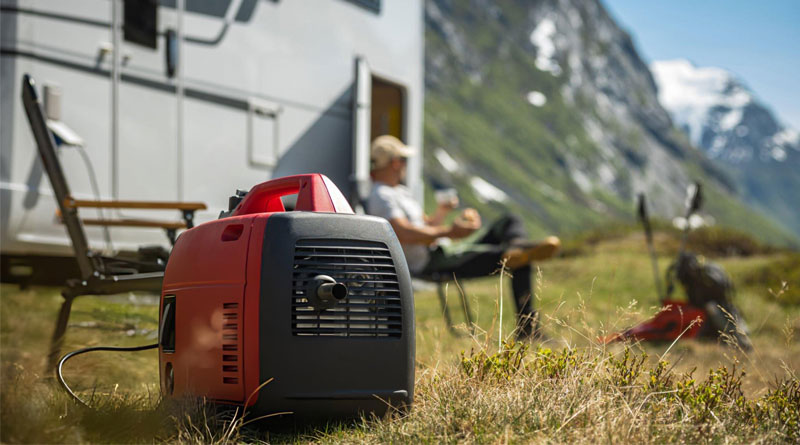
Inverter generators have revolutionized portable power, offering a quieter, more fuel-efficient, and electronically-safe alternative to traditional models. Perfectly suited for RV use, these generators deliver clean, stable electricity essential for sensitive devices and appliances, from laptops to air conditioners. This guide delves into the top inverter generators designed for RV enthusiasts.
1. PowerSmart Portable Inverter Generator for RV

- Power Output: 3600 starting watts, 3200 running watts (<3% THD)
- Portability: 50 pounds, with built-in handle
- Noise Level: 59 dBA at 23 feet (25% load)
- Outlets: (2) 120V 20A, (1) 120V 30A RV, (1) 12V DC, (2) 5V USB
The PowerSmart 3600-Watt Portable Inverter Generator is an excellent choice for RV owners seeking a balanced blend of power, portability, and quiet operation. Delivering a robust 3600 starting watts and 3200 running watts, it provides ample clean power (less than 3% THD) to safely run sensitive electronics like laptops, phones, and even some RV air conditioners. Its relatively lightweight design at just 50 pounds, coupled with a convenient built-in handle, makes it incredibly easy to transport and set up.
A standout feature is its remarkably quiet operation, producing only 59 dBA at a quarter load from 23 feet, ensuring your outdoor adventures remain peaceful and enjoyable. The control panel is well-equipped with multiple outlets, including a dedicated 120V 30 Amp RV receptacle, making it RV-ready right out of the box. Additional features like Eco Mode for fuel efficiency, low oil shutdown for engine protection, and overload reset enhance its reliability and user-friendliness, solidifying its position as a strong contender for portable power needs.
- Pros:
- Excellent power output for its size
- Very quiet operation
- Lightweight and highly portable
- Cons:
- Moderate run time at half load
- No dual-fuel option
2. WEN Portable Inverter Generator 56360i
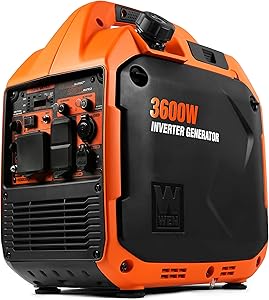
- Engine: 149cc, up to 3600 surge watts, 2900 rated watts
- Power Quality: Clean power (<1.2% THD) for sensitive electronics
- Weight: Ultralight 46 pounds
- Outlets: (2) 120V, (1) TT-30R RV, (1) 12V DC, (2) 5V USB
The WEN 3600-Watt Portable Inverter Generator (56360i) is designed for RV enthusiasts and campers who prioritize portability and clean power. Its 149cc engine delivers up to 3600 surge watts and a consistent 2900 rated watts, providing sufficient power for essential RV appliances and electronics. A significant advantage is its ability to produce clean, stable power with less than 1.2% Total Harmonic Distortion (THD), making it perfectly safe for charging sensitive devices such as smartphones, tablets, and laptops without risk of damage.
Weighing in at a mere 46 pounds, this ultralight generator is exceptionally easy to transport and store, making it a favorite for those on the move. A clever fuel shutoff feature maximizes the generator’s lifespan by consuming any residual fuel in the carburetor before shutdown, preventing common maintenance issues. The comprehensive control panel includes two three-prong 120V receptacles, a dedicated TT-30R RV receptacle, a 12V DC outlet, and two 5V USB ports, ensuring all your power needs are met. Backed by a three-year warranty, the WEN 56360i offers reliability and convenience in a compact package.
- Pros:
- Extremely lightweight for easy transport
- Generates very clean power (low THD)
- Fuel shutoff feature extends lifespan
- Cons:
- Slightly lower running watts than competitors
- No parallel capability mentioned
3. Pulsar Inverter Generator NE40BiSRCO
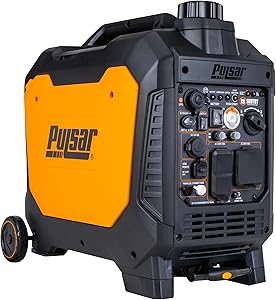
- Fuel Type: Dual Fuel (Gasoline & Propane)
- Power Output: 4000 peak/3200 running watts (gas), 3600 peak/2800 running watts (propane)
- Starting Options: Remote, Push-button, Recoil Start
- Safety Features: Low Oil Shutdown, CO Sentry sensor
The Pulsar 4000 Watt Dual Fuel Portable Inverter Generator (NE40BiSRCO) offers exceptional versatility and peace of mind for RV owners. Its dual-fuel capability allows operation on either gasoline or propane, providing flexibility depending on fuel availability and personal preference. With 4000 peak and 3200 running watts on gasoline, and slightly less on propane, it delivers reliable and clean power ideal for sensitive electronics. The impressive 6 hours of runtime at half load on a 1.66-gallon tank adds to its practical appeal for extended trips.
Starting this generator is a breeze with its three-way starting options: remote start for convenience from a distance, push-button electric start, and a dependable recoil start. Safety is paramount with features like automatic low oil shutdown to prevent engine damage and a crucial CO Sentry sensor that automatically powers down the unit if dangerous carbon monoxide levels are detected. Its parallel capability means you can link it with another compatible unit to double your power output, while the durable plastic frame reduces noise (64 dBA) and protects components.
- Pros:
- Versatile dual-fuel operation
- Multiple convenient starting options
- Enhanced safety with CO Sentry
- Cons:
- Battery for push/remote start not included
- Propane output slightly lower
4. Champion RV Ready Inverter Generator

- Fuel Type: Dual Fuel (Gasoline & Propane)
- Power Output: 4000 starting watts, 3000 running watts (gas)
- Noise Level: Ultra-quiet 64 dBA from 23 feet
- Run Time: Up to 10 hours on gasoline (25 hours on propane)
The Champion Power Equipment 4000-Watt Dual Fuel RV Ready Portable Inverter Generator stands out as a top-tier choice for RVers, combining versatility with advanced safety features. This generator is ready to operate right out of the box on either gasoline or propane, providing impressive flexibility for your power needs. On gasoline, it delivers 4000 starting watts and 3000 running watts, offering up to 10 hours of runtime, while propane extends this to an incredible 25 hours with 2700 running watts, making it ideal for extended trips without constant refueling.
Champion’s commitment to safety is evident with the integrated CO Shield carbon monoxide auto shutoff system, offering critical protection for you and your family. Its ultra-quiet operation at just 64 dBA from 23 feet ensures a peaceful environment, whether you’re camping or tailgating. The control panel is fully RV-ready, featuring a 120V 25A TT-30R outlet, a 120V 20A household duplex outlet with clean electricity (less than 3% THD), and a 12V automotive-style outlet. Furthermore, the optional parallel kit allows you to connect another Champion inverter for even greater power. Backed by a 3-year limited warranty and lifetime technical support, this generator is a reliable companion for any adventure.
- Pros:
- Exceptional dual-fuel versatility
- Very long run times, especially on propane
- Ultra-quiet operation
- Cons:
- Parallel kit sold separately
- Manual start only (no electric/remote)
5. Westinghouse Inverter Generator

- Power Output: 4000 peak watts, 3300 rated watts (<3% THD)
- Fuel Type: Dual Fuel (Gasoline & Propane)
- Starting Options: Remote, Electric, Recoil Start
- Noise Level: As low as 52 dBA
The Westinghouse 4000 Peak Watt Super Quiet Dual Fuel Portable Inverter Generator is a powerhouse of convenience and reliability for RV enthusiasts. Boasting 4000 peak watts and 3300 rated watts, it delivers consistent, clean power (less than 3% THD) capable of running all your essential RV appliances. The dual-fuel capability provides ultimate flexibility, allowing you to switch between gasoline and propane, which is incredibly useful for varying fuel availability and extended trips. Starting the generator is effortless, thanks to its versatile options including remote start with an included key fob, electric push-button start, and a dependable recoil start.
This generator truly excels in user experience, featuring a telescoping handle for easy transport and an LED Data Center that provides crucial information like fuel level, power output, remaining run time, voltage, and lifetime hours at a glance. Safety is a top priority with automatic low oil and Carbon Monoxide (CO) shutdown sensors protecting both the unit and its users. Furthermore, its incredibly quiet operation, as low as 52 dBA, ensures minimal disturbance, while the “Economy Mode” maximizes fuel efficiency, offering up to 7 hours of run time on a 1.69-gallon gas tank. With parallel capability and a 3-year warranty, the Westinghouse inverter generator is a superb choice for versatile and quiet RV power.
- Pros:
- Exceptionally quiet operation (52 dBA)
- Convenient remote and electric start
- Comprehensive LED data center
- Cons:
- Slightly larger footprint due to handle
- Residual oil/fuel odor from factory testing
6. WEN Quiet Inverter Generator DF680iX

- Engine: 224cc dual-fuel
- Power Output: 6800 surge watts (gas), 6000 surge watts (propane)
- Safety Feature: WEN Watchdog CO Shutdown Sensor
- Unique Feature: Bonded-neutral 240V for Level 2 EV charging
The WEN Quiet 6800-Watt Dual Fuel Portable Inverter Generator (DF680iX) is a robust and versatile power solution designed not just for RVs, but also for more demanding power needs, including electric vehicle backup. Its powerful 224cc dual-fuel engine delivers impressive output: 6800 surge watts and 5100 rated watts on gasoline, and 6000 surge watts and 4500 rated watts on propane. This significant power capacity ensures it can handle multiple appliances simultaneously, making it ideal for larger RVs or even as a substantial home backup during outages.
A standout innovation is its bonded-neutral 240V configuration, which enables low-power Level 2 charging for battery and hybrid electric vehicles—a unique and forward-thinking feature. Safety is paramount with the WEN Watchdog CO Shutdown Sensor, which automatically turns off the generator if dangerous carbon monoxide levels are detected. For ease of use and maintenance, it includes an electric start, onboard wheels, a telescoping pull handle, and a fuel shutoff feature to extend carburetor life. The comprehensive outlet panel, including an L14-30R 120V/240V receptacle, TT-30R RV outlet, and USB ports, ensures broad compatibility.
- Pros:
- High power output for demanding tasks
- Dual-fuel for versatile operation
- EV charging capability is unique
- Cons:
- Larger and heavier than lower-wattage models
- Might be overkill for basic RV needs
7. Generac Portable Inverter Generator

- Power Output: 3300-watt, with PowerRush Advance Technology
- Power Quality: TruePower Technology for clean, stable power
- Fuel Efficiency: Economy Mode for reduced consumption
- Safety Feature: COsense Technology
The Generac 3,300-Watt Gas Powered Portable Inverter Generator (7153 GP3300i) is an excellent portable power solution for RVers and campers who value clean, stable power and smart management. Equipped with Generac’s TruePower Technology, it delivers high-quality, consistent electricity with minimal harmonic distortion, making it perfectly safe for all your sensitive electronics, tools, and RV appliances. Furthermore, its innovative PowerRush Advance Technology provides over 50 percent more starting capacity, which is crucial for smoothly powering motor-driven equipment like air conditioners without tripping.
Designed for convenience and efficiency, this generator includes an Economy Mode that automatically adjusts engine speeds to reduce fuel consumption and noise, ensuring longer run times and a quieter environment. Generac also integrates its COsense Technology for smart power management and enhanced safety, automatically shutting down the unit if dangerous carbon monoxide levels are detected. With LED indicators for low oil, overload, and ready-to-use status, along with two USB ports for charging devices and parallel-ready capability for doubling power output, the GP3300i is a versatile, dependable, and user-friendly choice for any outdoor adventure or home backup scenario.
- Pros:
- Excellent clean and stable power output
- PowerRush Technology for high starting capacity
- Fuel-efficient Economy Mode
- Cons:
- Gasoline-only operation
- Parallel kit sold separately
How to Choose Inverter Generators For RV
Choosing the best inverter generator for your RV is a critical decision that directly impacts your comfort, convenience, and ability to enjoy off-grid adventures. With a myriad of options available, understanding the key factors involved will help you make an informed choice that perfectly matches your RV lifestyle. From power requirements to fuel types and advanced safety features, here’s a comprehensive guide to navigating the selection process.
Understanding Your Power Needs
The first and most crucial step in selecting an RV inverter generator is to accurately assess your power requirements. This involves identifying all the appliances and devices you plan to run simultaneously. RVs typically have varying electrical needs, ranging from basic lighting and charging to powering air conditioners, microwaves, and entertainment systems.
Calculating Wattage
To determine the total wattage you’ll need, list all the appliances you intend to use at the same time. Check their labels for “starting watts” (also known as surge watts) and “running watts.” Starting watts are the brief burst of power an appliance needs to kick on, especially those with motors like air conditioners, refrigerators, and microwaves. Running watts are the continuous power required to keep them operating. Always prioritize the highest starting wattage among your simultaneously used appliances, then add the running watts of all other devices. Your generator’s surge watts must be able to handle this highest starting load, and its running watts must exceed the sum of all running loads.
For example, an RV air conditioner might require 2000-3000 starting watts but only 1500-2000 running watts. If you also want to run a microwave (1000 running watts, 1500 starting watts) and charge a laptop (50 watts running) at the same time, you’d need a generator with surge capacity to handle the AC’s starting load, plus enough running watts for the AC, microwave, and laptop combined.
Fuel Type Considerations
Inverter generators primarily run on gasoline, but many modern units offer dual-fuel capabilities, allowing them to operate on both gasoline and propane. Each fuel type has its advantages and disadvantages.
Gasoline Generators
Gasoline is widely available, making it easy to refuel on the go. Gasoline generators often provide slightly higher power output compared to their propane counterparts. However, gasoline has a shorter shelf life and can become stale, potentially causing carburetor issues if not properly stored or treated with stabilizers. It also has a distinct odor and is highly flammable, requiring careful handling and storage.
Propane (LPG) Generators
Propane offers a cleaner burn, leading to less engine maintenance and fewer emissions. It has an indefinite shelf life and is safer to store than gasoline, as it’s kept in sealed tanks. RVs often come equipped with propane tanks for heating and cooking, making it a convenient shared fuel source. The downsides are that propane typically yields slightly less power output and is generally less fuel-efficient, meaning shorter run times per tank compared to gasoline. However, propane generators are often easier to start in cold weather.
Dual-Fuel Generators
Dual-fuel generators offer the best of both worlds, providing flexibility to switch between gasoline and propane based on availability, cost, or convenience. This versatility can be invaluable for extended trips or in remote locations where one fuel type might be scarce.
Noise Level: Quiet Operation is Key
One of the most significant advantages of inverter generators for RV use is their quiet operation. Unlike conventional generators, inverters typically operate at much lower decibel levels, often ranging from 50 to 65 dBA. This is crucial for maintaining peace in campgrounds, adhering to noise ordinances, and simply enjoying a serene outdoor environment.
Look for generators with an “Eco Mode” or “Economy Mode,” which automatically adjusts the engine speed to match the load, further reducing noise and improving fuel efficiency. A lower decibel rating, especially at a quarter or half load, will make a big difference in your camping experience and relationships with fellow campers.
Portability and Design
An RV inverter generator needs to be portable enough to load, unload, and move around your campsite. Consider the weight and physical dimensions of the unit. Many models feature built-in wheels, telescoping handles, or sturdy carry handles to facilitate transport. Lighter units (under 60 pounds) are ideal for easier handling, while heavier, higher-wattage models may require wheels or two people to move.
Also, evaluate the overall design: is it compact enough to fit in your RV’s storage compartments or truck bed? Does it have a robust frame that can withstand the rigors of travel and outdoor use?
Output and Safety Features
Beyond basic power output, modern inverter generators come with a host of features that enhance functionality, safety, and convenience.
Clean Power Output (Low THD)
Inverter generators produce “clean power” with a low Total Harmonic Distortion (THD), typically less than 3%. This is crucial for safely operating sensitive electronics such as laptops, smartphones, TVs, and medical equipment, preventing damage that can occur with the “dirty power” from conventional generators.
RV-Ready Outlets
For RV use, look for a generator equipped with a 30-amp RV receptacle (TT-30R). This allows for direct plug-and-play with your RV’s shore power cord, eliminating the need for adapters. Additional outlets like 120V household receptacles, 12V DC ports, and USB charging ports increase versatility.
Safety Protocols
- Low Oil Shutdown: Automatically shuts off the engine if oil levels are too low, preventing costly damage.
- Overload Protection: Prevents damage to the generator and connected appliances by shutting down if the load exceeds capacity.
- CO Sensor (Carbon Monoxide Shutdown): A vital safety feature that automatically turns off the generator if dangerous levels of carbon monoxide are detected, protecting users from this odorless, colorless gas.
Parallel Capability
Many inverter generators are “parallel capable,” meaning you can connect two identical units together to effectively double your power output. This is an excellent feature if you sometimes need more power (e.g., to run two ACs) but prefer the flexibility and portability of two smaller, lighter units for everyday use.
Electric/Remote Start
While recoil (pull) start is standard, many advanced models offer electric push-button start for effortless ignition. Some even include remote start with a key fob, allowing you to power up or shut down the generator from inside your RV, which is a significant convenience, especially in inclement weather.
Brand Reputation and Warranty
Invest in a generator from a reputable brand known for quality and customer service. Brands like Honda, Yamaha, Generac, Champion, WEN, and Westinghouse are popular choices in the RV community. Check the warranty period and what it covers, as well as the availability of parts and service centers.
Budget Considerations
Inverter generators generally cost more than conventional models, but the benefits of quiet operation, fuel efficiency, and clean power often justify the investment. Set a realistic budget based on your power needs and desired features. Remember that the cheapest option isn’t always the best value in the long run.
Conclusion
Choosing the best inverter generator for your RV involves a careful evaluation of your specific power needs, preferred fuel type, desired noise level, and essential features. By prioritizing clean power, portability, quiet operation, and key safety protocols, you can find a reliable and efficient power source that enhances your RV experience, allowing you to enjoy all the comforts of home wherever your adventures take you. Happy travels!