Best RV Batteries For Cold Weather of 2025
Embarking on RV adventures often means braving diverse climates, and when the mercury drops, your battery’s performance becomes paramount. Choosing the right RV battery for cold weather isn’t just about power; it’s about reliability, safety, and ensuring your mobile sanctuary remains comfortable and functional, even in freezing conditions. Standard batteries can struggle significantly in low temperatures, leading to reduced capacity, slower charging, and potentially leaving you stranded without essential power.
1. Renogy Deep Cycle AGM 12V 100Ah Battery

- Voltage/Capacity: 12 Volt 100Ah
- Self-Discharge Rate: <3% at 77℉ (25℃)
- Max Discharge Current: 1100A (5 seconds)
- Operating Temperature Range: -4 to 140°F (-20 to 60°C)
The Renogy Deep Cycle AGM 12V 100Ah battery stands out as a reliable and exceptionally safe choice for RVers, campers, and off-grid enthusiasts, especially when considering performance in varying temperatures. With over 230,000 units sold globally, its reputation for stability and durability is well-established. Unlike some lithium alternatives, its AGM chemistry provides inherent safety and superior chemical stability. This battery supports both series and parallel connections (up to 4P).
What truly sets this Renogy AGM battery apart for cold weather applications is its upgraded electrolyte formula, ensuring outstanding discharge performance even in extreme temperatures ranging from -4°F to 140°F (-20°C to 60°C). This broad temperature tolerance allows for worry-free use in cold climates without compromising power delivery. With a substantial 1100A max discharge current, it can capably power most common RV appliances, from fridges to microwaves. Its low self-discharge rate, below 3% monthly, also means it retains charge longer when stored.
- Pros:
- Exceptional safety with stable AGM chemistry
- Outstanding performance in extreme cold (-4°F)
- Completely maintenance-free operation
- Cons:
- Heavier than equivalent LiFePO4 batteries
- Fewer deep cycles compared to LiFePO4
2. TEMGO 12V 300Ah Self-Heating LiFePO4 Battery
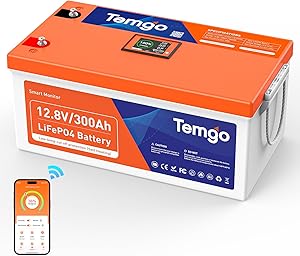
- Voltage/Capacity: 12V 300Ah (3840Wh)
- BMS: Built-in 200A BMS
- Cycle Life: 5000+ cycles
- Self-Heating Activation: Below 32°F (0°C)
The TEMGO 12V 300Ah Self-Heating LiFePO4 Lithium Battery is an impressive powerhouse designed for serious RVers and off-gridders who demand high capacity and intelligent cold-weather protection. Built with premium LiFePO4 cells, it offers a robust 300Ah capacity, providing stable power with a high energy density for extended runtime. A key advantage for cold climates is its integrated automatic self-heating function, which activates when the battery temperature drops below 32°F (0°C). This ensures the battery reaches a safe charging temperature (41°F/5°C) before accepting a charge, significantly prolonging its lifespan and preventing damage in freezing conditions.
Beyond its cold-weather resilience, the TEMGO battery offers sophisticated monitoring capabilities. Its integrated smart touch screen provides real-time battery status at a glance, eliminating the need for external meters. For remote monitoring, the Bluetooth App (available for iOS and Android) allows you to check performance from your smartphone, keeping you informed on the go. The advanced 200A Battery Management System (BMS) offers comprehensive protection against overcharge, over-discharge, overcurrent, short circuits, and overheating, ensuring safe and stable operation. With over 5000 deep cycles and a 5-year warranty, this battery represents a long-term, versatile solution for RVs, solar setups, and any demanding off-grid application.
- Pros:
- Automatic self-heating for cold charging
- High 300Ah capacity for extended use
- Smart touch screen and Bluetooth monitoring
- Cons:
- Higher initial investment than AGM batteries
- Heavier than some smaller capacity LiFePO4 units
3. Redodo 12V 100Ah LiFePO4 with Self-Heating

- Voltage/Capacity: 12.8V 100Ah
- Heating Power: 100W (dual heating pads)
- Charging Cutoff: Below 32℉ (0°C)
- Discharging Cutoff: Below -4℉ (-20°C)
The Redodo 12V 100Ah LiFePO4 battery is specifically engineered for cold climates, boasting an innovative self-heating system that significantly enhances its performance in freezing temperatures. Equipped with dual 100W heating pads, this battery warms up twice as fast as many competitors, reaching a safe charging temperature (from 14℉ to 41℉) in just 30 minutes. This rapid heating ensures you can continue charging your battery efficiently even when ambient temperatures plummet, a critical feature for off-grid living or extended winter RV trips. Furthermore, its intelligent low-temperature cutoff protection prevents charging below 32℉ and discharging below -4℉, safeguarding the battery’s health and extending its impressive lifespan.
Beyond its cold-weather prowess, the Redodo battery offers exceptional power density and lightweight design. At only 23.32 lbs, it’s roughly 65% lighter than a comparable 100Ah AGM battery, making installation and portability much easier without sacrificing power. Its self-designed 100A BMS, coupled with Automotive Grade cells, provides comprehensive protection against various electrical hazards and ensures an astounding 15,000 deep cycles at 60% DOD, translating to a service life of over 10 years. This versatility, combined with the ability to create larger 4P4S systems, makes the Redodo 100Ah a highly adaptable and durable power solution for RVs, solar setups, marine applications, and off-grid systems in even the harshest cold environments.
- Pros:
- 2X faster self-heating system
- Low-temperature charging and discharging cutoffs
- Significantly lighter than AGM batteries
- Cons:
- Heating function draws power from the battery
- Higher upfront cost than traditional batteries
4. Litime 12V 280Ah LiFePO4 Battery with Bluetooth

- Voltage/Capacity: 12V 280Ah (3584Wh)
- Max Load: 2560W
- Cycle Life: Up to 15,000 cycles
- Low-Temp Protection: Charging below 0°C, Discharging below -20°C
The Litime 12V 280Ah LiFePO4 Lithium Battery is a formidable power solution, particularly well-suited for extensive RV, marine, and home energy needs where high capacity and cold-weather reliability are crucial. Boasting a substantial 3584Wh of energy and a max load of 2560W, this battery can comfortably run 1kWh devices for approximately 3.5 hours, ensuring your essential appliances and systems stay powered longer. Its impressive energy density of 60.7Wh/lbs means it packs significantly more power at a much lighter weight (55% lighter than a comparable 12V 200Ah lead-acid battery), simplifying installation and improving overall vehicle efficiency.
For cold-weather use, the Litime battery features crucial low-temperature protection, halting charging below 0°C (32°F) and discharging below -20°C (-4°F). While it lacks a self-heating function, this protection prevents internal damage, preserving the battery’s longevity and performance in freezing conditions. The robust 200A BMS provides comprehensive safety, guarding against overcharge, over-discharge, overcurrent, overheating, and short circuits, augmented by dust, water, and salt spray resistance for diverse environments. With Bluetooth 5.0 monitoring, users can easily track SOC, voltage, and temperature via a smartphone app, optimizing power usage and ensuring peace of mind throughout their adventures. Its extraordinary 15,000 deep cycle life further solidifies its value as a long-term investment.
- Pros:
- Very high energy density and lightweight
- Extremely long cycle life (up to 15,000 cycles)
- Robust 200A BMS with comprehensive protection
- Cons:
- No built-in self-heating function
- High initial cost for the capacity
5. OPTIMA Batteries High Performance 34M Sealed AGM

- Voltage/CCA: 12-Volt, 800 Cold Cranking Amps (CCA)
- Reserve Capacity: 100 minutes
- C20 Capacity: 50 Ah
- Weight: 38.4 pounds
The OPTIMA Batteries High Performance 34M Sealed AGM battery is an excellent choice for RVers and boat owners seeking a reliable starting battery that also offers capable deep cycle performance, particularly in challenging conditions. Its standout feature is the Spiralcell Technology, utilizing 99.99% pure lead to deliver superior power and consistent performance, often outperforming conventional flat-plate batteries. With 800 Cold Cranking Amps (CCA), this battery ensures optimal starting power even in very cold weather, making it a dependable option when temperatures drop. Its robust construction makes it fifteen times more resistant to vibration than standard flooded batteries, ensuring exceptional durability for demanding RV and marine applications.
As a dual-purpose battery, the OPTIMA 34M is versatile enough for both starting engines and providing accessory power, offering a Reserve Capacity of 100 minutes for sustained performance. It boasts up to three times longer life compared to standard flooded batteries, representing a solid long-term investment. The sealed AGM design means it is completely maintenance-free, offering maximum convenience without the need for electrolyte checks or watering. Its dual terminal configuration (SAE & 5/16″ Stainless Steel Stud Posts) and versatile mounting options further enhance its adaptability. For those prioritizing powerful starting, vibration resistance, and a long, maintenance-free life in variable climates, the OPTIMA 34M is a premium choice.
- Pros:
- Excellent cold-cranking amps (800 CCA)
- Highly resistant to vibration and impacts
- Maintenance-free, sealed AGM design
- Cons:
- Higher cost than traditional flooded lead-acid batteries
- Not suitable for extensive off-grid power banks
6. WEIZE 12V 310Ah Bluetooth LiFePO4 Battery

- Voltage/Capacity: 12V 310Ah (3.968kWh)
- BMS: Built-in 200A BMS
- Peak Discharge: 600A for 5 seconds
- Cycle Life: 2000 cycles (100% DOD) / 8000 cycles (50% DOD)
The WEIZE 12V 310Ah Bluetooth LiFePO4 Lithium Battery delivers exceptional performance and longevity, making it an excellent choice for high-power RV, marine, and off-grid applications. With a substantial 3.968kWh of energy and supporting a maximum load of 3968W, it can easily handle demanding appliances. Its continuous discharge current of up to 200A, with a peak of 600A for 5 seconds, ensures ample power for various needs. Crucially for cold weather, this battery includes built-in low-temperature protection, which automatically safeguards against damage in freezing conditions, contributing to its impressive lifespan that far surpasses traditional lead-acid alternatives. This feature is a critical safeguard for those camping in chilly climates.
One of the most convenient aspects of the WEIZE battery is its integrated Bluetooth functionality, allowing seamless monitoring of the battery’s status directly from your smartphone at any time. The advanced 200A Battery Management System (BMS) ensures comprehensive protection against overcharge, over-discharge, overcurrent, short circuits, and extreme temperatures, thereby enhancing safety and extending the battery’s life significantly. Weighing only about one-third of comparable lead-acid batteries, it offers greater energy density in a much lighter package, making installation and handling considerably easier. With its robust Grade A cells, impressive cycle life, and eco-friendly, non-hazardous chemistry, the WEIZE 310Ah LiFePO4 battery is a smart, long-term investment for reliable power in diverse environments.
- Pros:
- High 310Ah capacity with excellent energy density
- Built-in Bluetooth for convenient monitoring
- Integrated low-temperature protection
- Cons:
- No active self-heating function for charging
- Higher initial investment compared to lead-acid
7. power queen 12V 100Ah LiFePO4 with Auto-Heating

- Voltage/Capacity: 12V 100Ah (1280Wh)
- Heating Efficiency: 2X faster (100W heated pad)
- Charging Temperature: Down to -4°F (-20°C) with heating
- Cycle Life: 4000 cycles (100% DOD) / 15000+ cycles (60% DOD)
The power queen 12V 100Ah LiFePO4 battery is specifically engineered for cold-weather reliability, featuring an upgraded auto-heating technology that ensures optimal performance in freezing conditions. Its 100W heated lithium pad activates below 41°F (5°C), delivering twice the heating efficiency of many competitors, allowing for safe charging even at extreme temperatures down to -4°F (-20°C). This intelligent heating system also features variable durations, optimizing energy consumption while ensuring the battery is always ready to deliver peak output. This makes it an ideal choice for RVs, trolling motors, and off-grid systems where consistent power in low temperatures is non-negotiable.
Beyond its impressive cold-weather capabilities, the power queen battery prioritizes safety and longevity. It incorporates a robust 100A BMS (Battery Management System) that provides comprehensive protection against overcharging, over-discharging, over-current, over-temperature, and short-circuits. Built with EV Grade A LiFePO4 cells, it boasts an exceptional cycle life of over 4000 cycles at 100% DOD, extending to over 15,000 cycles at 60% DOD, guaranteeing a long service life. Its compact Group 31 size and significantly lighter weight (1/5th of lead-acid) simplify installation and portability. With IP65 waterproofing and support for up to 4P4S configurations, this versatile battery provides reliable, eco-friendly energy for a wide range of demanding outdoor and home energy storage applications.
- Pros:
- Rapid auto-heating for charging down to -4°F
- High cycle life with EV Grade A cells
- Robust 100A BMS with comprehensive protection
- Cons:
- Heating function draws power from the battery
- 100Ah capacity might be insufficient for very large power needs
How to Choose RV Batteries For Cold Weather
Venturing into colder climates with your RV offers breathtaking scenery and unique experiences, but it also presents a significant challenge for your power system. RV batteries, especially standard ones, can struggle immensely when temperatures plummet. Selecting the right battery isn’t just about ensuring your lights stay on; it’s about maintaining essential heating, powering critical appliances, and safeguarding your investment against damage. This comprehensive guide will walk you through the nuances of cold-weather battery performance, highlight the best types of batteries for frosty environments, and detail the key features to prioritize when making your selection, ensuring your RV stays powered and comfortable no matter how low the thermometer dips.
Why Cold Weather Impacts RV Batteries
Cold weather severely affects battery chemistry and performance across various battery types. As temperatures drop, the chemical reactions inside a battery slow down significantly, impeding its ability to deliver and accept charge efficiently. This phenomenon is a universal challenge that RVers must understand and mitigate, as it directly impacts the reliability and lifespan of their power source during frosty adventures.
Reduced Capacity
One of the most immediate and impactful effects of cold weather on RV batteries is a substantial reduction in their available capacity. A battery rated for 100Ah at a comfortable room temperature might only be able to deliver 60-70% of that capacity when temperatures dip below freezing. This means your battery bank will deplete much faster, requiring more frequent recharging and potentially leaving you with insufficient power for essential functions like heating, lighting, and cooking.
Slower Charging
Beyond reduced capacity, cold temperatures also drastically slow down the charging process. Batteries struggle to accept current efficiently when cold, leading to prolonged charging cycles and wasted energy, especially from solar panels or standard converters. For sensitive lithium batteries, attempting to charge below freezing point can cause permanent internal damage, a process known as “lithium plating,” which irreversibly degrades the battery cells and significantly shortens its overall lifespan.
Increased Self-Discharge
While often associated with high temperatures, extremely cold conditions can also influence a battery’s self-discharge rate, albeit less directly. More critically, for traditional lead-acid batteries, prolonged exposure to cold in a discharged state can accelerate sulfation. Sulfation occurs when lead sulfate crystals build up on the battery plates, hardening them and reducing their ability to store and release energy, ultimately leading to permanent capacity loss and the need for premature replacement.
Types of RV Batteries for Cold Climates
When preparing your RV for cold weather, the type of battery chemistry you choose is a fundamental decision. Each option presents distinct advantages and disadvantages when subjected to low temperatures, influencing both performance and cost.
Absorbed Glass Mat (AGM) Batteries
AGM batteries represent a significant upgrade from traditional flooded lead-acid batteries and are a popular choice for RVers due to their maintenance-free operation, spill-proof design, and enhanced resistance to vibration. For cold weather, AGMs generally perform better than their flooded counterparts because their electrolyte is absorbed into dense fiberglass mats. This design feature prevents electrolyte stratification and reduces the risk of freezing, making them more resilient in colder environments. They can typically discharge efficiently down to around -4°F (-20°C) without significant issues, although their overall capacity will still be noticeably reduced. While charging AGMs in freezing conditions is safer than charging cold lithium batteries, it remains less efficient and requires a well-regulated charger to prevent potential damage from overcharging.
Lithium Iron Phosphate (LiFePO4) Batteries
LiFePO4 batteries are rapidly becoming the preferred power source for modern RVs, lauded for their lightweight nature, superior energy density, exceptionally long cycle life, and consistent power output throughout their discharge cycle. While these advantages are undeniable, their primary limitation in cold weather has historically been their inability to accept a charge below freezing (typically 32°F/0°C) without incurring permanent internal damage. However, advancements in battery technology have addressed this challenge. Many contemporary LiFePO4 batteries designed for cold weather now incorporate a built-in self-heating system. This intelligent system automatically warms the battery cells to a safe temperature before allowing charging, effectively mitigating their main cold-weather drawback and making them highly suitable for even the most extreme cold-weather RVing conditions.
Key Features to Look For in Cold Weather RV Batteries
Choosing the best battery for reliable cold-weather performance involves more than simply selecting a specific chemistry. Savvy RVers should prioritize several key features that enhance safety, longevity, and functionality when temperatures drop.
Low-Temperature Charging Protection
For any LiFePO4 battery, low-temperature charging protection is a non-negotiable feature. A sophisticated Battery Management System (BMS) should automatically prevent the battery from accepting a charge when its internal temperature drops below 32°F (0°C). This critical safeguard prevents irreversible damage, such as lithium plating, which can drastically reduce the battery’s lifespan. Some advanced systems also include a low-temperature discharge cutoff, preventing usage below a certain point (e.g., -4°F/-20°C) to further protect the cells.
Built-in Self-Heating Function
This is arguably the most beneficial feature for LiFePO4 batteries used in cold climates. A built-in self-heating system automatically activates when the battery’s internal temperature is too low for safe charging. It uses a small amount of the battery’s energy to warm the cells to an optimal temperature, usually above 32°F (0°C), before allowing a charge to commence. This feature effectively eliminates the cold-charging limitation of lithium batteries, ensuring reliable recharging even in sub-freezing environments and significantly expanding your cold-weather boondocking capabilities.
Robust Battery Management System (BMS)
The BMS acts as the intelligent controller and protector of your battery. Beyond temperature management, a high-quality BMS is essential for safeguarding against a range of issues, including overcharging, over-discharging, overcurrent, and short circuits. For cold weather applications, ensure the BMS is specifically designed to monitor and manage internal battery temperatures actively, coordinating with any heating elements and providing accurate cold-weather performance data.
High Cold Cranking Amps (CCA) for Starting
If your RV setup requires a battery specifically for starting the engine, particularly in cold conditions, a high Cold Cranking Amps (CCA) rating is paramount. CCA measures a battery’s ability to deliver a burst of power to start an engine in low temperatures. While dedicated deep cycle batteries are not designed for engine starting, if you opt for a dual-purpose AGM battery, always prioritize a robust CCA number to ensure reliable cold starts.
Cycle Life and Depth of Discharge (DOD)
The cycle life refers to the number of times a battery can be fully discharged and recharged before its capacity significantly degrades. LiFePO4 batteries typically offer thousands of cycles, often at deep depths of discharge (80-100% DOD), far exceeding lead-acid batteries that are best kept above 50% DOD. In cold weather, where effective capacity is already reduced, having a battery that can handle deeper, more frequent cycles without degradation is crucial for maintaining consistent power and extending the overall lifespan of your battery bank.
Physical Durability and IP Rating
RV batteries are subjected to significant vibration, impacts, and exposure to various environmental elements. Therefore, robust physical construction is essential. Look for batteries with sturdy casings and, if they are intended for external mounting, an appropriate IP (Ingress Protection) rating. An IP rating indicates the battery’s resistance to dust and water ingress, ensuring it can withstand harsh outdoor conditions encountered during winter travel.
Installation and Maintenance Tips for Cold Weather
Even with the most advanced cold-weather battery, proper installation and diligent maintenance are crucial to optimize performance and longevity in frigid conditions.
Insulation and Location
Whenever feasible, install your RV batteries in a heated compartment or insulated battery box within the vehicle’s interior. This strategic placement helps to retain any warmth generated from charging or operation, reducing the thermal stress on the battery. For LiFePO4 batteries with self-heating, insulation can minimize the energy consumed by the heating element, thereby increasing overall efficiency and available power for your RV’s systems.
Proper Charging
Always utilize a smart, multi-stage battery charger that is specifically compatible with your battery chemistry. For LiFePO4 batteries, this means a charger designed for lithium, ideally with a temperature compensation feature. Avoid attempting to fast-charge cold batteries, especially lithium, if they lack internal heating. Monitoring your battery’s internal temperature (if equipped with a sensor or app) is a best practice to ensure safe and efficient charging, preventing potential damage from overcharging or attempting to charge below freezing.
Winter Storage
When preparing your RV for winter storage, proper battery care is paramount. Ensure your batteries are fully charged (or charged to their manufacturer-recommended storage voltage for LiFePO4, typically around 50-70% State of Charge) before storing. If possible, remove batteries and store them in a temperature-controlled environment. If they must remain in the RV, disconnect them from all loads to prevent parasitic drains and consider using a smart trickle charger or battery maintainer specifically designed for cold weather to keep them topped off without overcharging.
Making Your Decision
Choosing the best RV battery for cold weather ultimately boils down to a balance between your budget, specific power demands, and typical travel destinations. While robust AGM batteries offer a reliable and often more affordable entry into cold-weather resilience, cutting-edge LiFePO4 batteries with integrated self-heating capabilities provide unparalleled performance, extended longevity, and crucial peace of mind for avid winter RVers. When evaluating options, always consider the total cost of ownership, as the higher upfront investment for lithium often translates into significant long-term savings due to their superior efficiency, deep cycle capability, and extended lifespan. By prioritizing key features such as low-temperature protection and integrated heating, you can confidently select a power system robust enough to tackle any winter adventure.