Best RV Kayak Racks of 2026
Finding the best RV kayak rack is essential for adventurers who want to transport their watercraft safely without sacrificing interior space. This guide reviews top-rated hitch-mount and vertical carriers designed to handle the unique vibrations of road travel, helping you choose a secure, durable, and easy-to-load system that perfectly fits your motorhome, travel trailer, or tow vehicle.
1. KUAFU RV Hitch Mount Kayak Rack

- Compatibility: 2-inch Hitch Receivers
- Material: Powder-Coated Alloy Steel
- Capacity: 2 Kayaks (150 lbs total)
- Adjustment: 3-Level Height Holes
The KUAFU RV Hitch Mount Kayak Rack is a heavy-duty vertical solution designed for travelers who need to carry two kayaks simultaneously. Built from thick, impact-resistant steel, this rack features a black powder coating that provides excellent rust resistance for long-term outdoor exposure. The vertical standing design is a space-saver, ensuring your kayaks remain secure behind your RV or truck while maintaining a manageable vehicle profile.
One of the standout features is the adjustable lower cradle, which offers three different mounting heights to accommodate various kayak lengths or paddleboard shapes. The stand includes a protective layer to prevent metal-on-hull contact, reducing the risk of scratches during transit. With the included ratchet straps and straightforward screw-on installation, this carrier is a reliable choice for rugged cross-country trips and weekend lake visits alike.
- Pros:
- High 150 lbs weight capacity
- Adjustable mounting heights
- Rust-proof powder coating
- Cons:
- May block rear view cameras
- Requires a 2-inch receiver
- Straps could be higher quality
2. VertiYak Vertical Kayak Rack

- Length Limit: Up to 12-foot Kayaks
- Receiver Type: 2-inch Hitch Mount
- Storage: Folds Flat/Up Design
- Cradle Size: 11.5 x 17 inches
The VertiYak Kayak Rack offers a specialized vertical transport system that is perfect for motorhomes where rear-wall space is at a premium. It is designed to hold kayaks and paddleboards up to 12 feet in length, mounting securely into a standard 2-inch hitch receiver. A frame-welded receiver is highly recommended to handle the leverage and weight of two vertical watercraft during high-speed highway travel.
Efficiency is the core of this rack’s design, as it features a lower cradle hoop with three adjustable height settings for a custom fit. A major advantage for RVers is the ability to fold the rack flat or up when not in use, making storage much easier when the kayaks are off. While it requires the user to provide their own padding and tie-down straps, its structural stability remains a top choice for serious enthusiasts.
- Pros:
- Convenient folding storage design
- Adjustable cradle height
- Ideal for long 12ft kayaks
- Cons:
- Does not include tie-down straps
- Pool noodles/padding not included
- Best with welded receivers
3. ECOTRIC Heavy Duty RV Kayak Rack
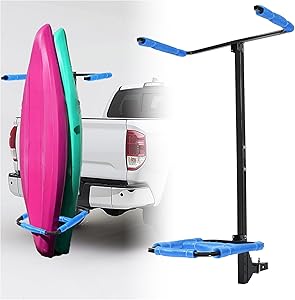
- Max Load: 150 lbs Capacity
- Width Limit: 12-inch Kayak Width
- Safety: Foam-Padded Hoops
- Mounting: Quick Bolt-On Setup
The ECOTRIC RV Hitch Mount Kayak Rack provides a robust and wobble-free solution for transporting up to two kayaks on various vehicles, from SUVs to large motorhomes. Constructed from high-strength steel with a durable finish, this rack is built to survive harsh weather and the vibration of rugged terrains. It ensures your kayaks stay upright and secure, providing peace of mind during long-distance road trips.
Functionality is enhanced by the customizable height settings and the inclusion of foam-padded hoops that protect your gear’s finish. The setup is designed for efficiency, coming with all necessary hardware and ratchet straps to get you on the road quickly. Its universal 2-inch hitch compatibility and sturdy frame make it a versatile asset for any RV owner looking for a reliable, vertical standing carrier that handles heavy loads.
- Pros:
- Includes all mounting hardware
- Foam padding prevents scratches
- Durable high-strength steel
- Cons:
- Heavy to install alone
- Limited to 12-inch wide hulls
- Standard bolts may rust over time
How to Choose RV Kayak Racks
Choosing the best RV kayak rack is a critical decision for any water sports enthusiast hitting the open road. Unlike standard vehicle racks, RV racks must contend with significant overhang, increased vibration, and unique mounting constraints. Whether you are driving a Class A motorhome, a camper van, or towing a travel trailer, the right rack ensures your kayaks arrive safely without damaging your vehicle or the kayaks themselves. This guide will walk you through every technical and practical consideration for making the right choice.
Determine Your Mounting Location
The first step in selecting a rack is deciding where it will sit on your RV. There are three primary locations for RV kayak racks, each with its own set of advantages and challenges. Hitch-mounted racks are the most popular for RVs because they utilize the existing 2-inch receiver. These are often vertical racks that stand the kayaks upright, saving width but adding height. Roof racks are common on camper vans but can be difficult to reach on tall motorhomes. Finally, ladder-mounted racks are lightweight options that attach to the rear ladder of the RV, though they are usually limited to carrying just one kayak and require a very sturdy ladder assembly.
Assess Weight Capacity and Hull Compatibility
Kayaks can vary significantly in weight, ranging from 40-pound fiberglass models to 100-pound fishing kayaks with integrated pedals. Most dual-kayak racks for RVs have a total weight capacity of approximately 150 pounds. You must verify that the rack can handle the combined weight of your gear. Additionally, check the width compatibility. Vertical racks often have hoops or cradles that fit specific hull widths (usually around 12 inches). If you have a wide-beamed sit-on-top fishing kayak, ensure the cradle is wide enough to seat the hull securely without forcing the plastic to bend.
Prioritize Vertical vs. Horizontal Orientation
Vertical kayak racks are the “gold standard” for the RV industry. By standing the kayaks on their tails, you prevent the kayaks from extending past the sides of the RV, which is a major safety concern and legal issue in many states. Horizontal racks are generally reserved for the roof or for towing behind a vehicle. When choosing a vertical rack, ensure it has an adjustable height feature. This allows you to lower the center of gravity or clear the roofline of your RV, providing a more stable ride and better fuel efficiency by reducing wind drag.
Check for Clearance and Sway Protection
Because RVs have a long distance between the rear axle and the hitch, the “bounce” at the back of the vehicle is much more pronounced than on a car. This is known as the “lever effect.” A high-quality RV kayak rack must feature a tight hitch connection. Look for racks that include or support anti-rattle devices or hitch immobilizers. Without these, the kayaks will sway and vibrate, which can lead to metal fatigue in the rack or damage to the RV’s hitch receiver over thousands of miles. Furthermore, ensure the rack provides enough clearance so the kayaks do not rub against the rear wall or the window of the motorhome.
Material Durability and Weather Resistance
Your rack will be exposed to rain, road salt, and intense UV rays. Steel is the most common material for RV racks due to its strength, but it must be properly treated. Look for high-quality powder coating rather than simple spray paint. Powder coating is more resistant to chipping and prevents the internal steel from rusting. If you frequently travel to coastal areas where salt air is a factor, stainless steel hardware is a huge plus. Aluminum racks are lighter and rust-proof but are often more expensive and may have lower weight ratings compared to heavy-duty steel vertical carriers.
Ease of Loading and Accessibility
If a rack is too difficult to load, you’ll find yourself leaving the kayaks at home. Vertical hitch racks are generally easier to load than roof racks because you only have to lift the kayak a few feet off the ground to set the tail in the cradle. Look for racks with “tilt” features or adjustable hoops that allow you to lean the rack back during the loading process. Additionally, consider how the rack affects your access to the rear of the RV. Some racks are designed to swing away or fold down, allowing you to open rear doors or access engine compartments without removing the entire assembly.
Safety Straps and Padding
The rack is only as good as the tie-down system. High-quality RV kayak racks should come with heavy-duty ratchet straps or cam-buckle straps. Avoid using bungee cords, as they stretch under the high-tension environment of RV travel. Protection for the kayak is also vital. Look for racks that feature integrated foam padding or rubberized coatings on the contact points. This prevents the “vibration rash” that occurs when a hard plastic kayak hull rubs against a metal rack for eight hours on the highway. If a rack doesn’t come with padding, you can often add pool noodles or pipe insulation, but integrated solutions are usually more secure.
Legal and Visibility Considerations
Finally, consider the legalities of your setup. In many jurisdictions, your kayaks cannot block your license plate or your tail lights. If your vertical rack obscures these, you may need to install a light bar or move your license plate to a visible spot on the rack. Additionally, check your total height. If your kayaks extend significantly above the roof of your RV, you need to be mindful of low-clearance bridges, gas station canopies, and tree branches at campgrounds. Always measure your “traveling height” before hitting the road to avoid costly roof or kayak damage.