Best RV Sealants For Roof of 2026
Protecting your RV roof is paramount to preventing leaks and costly water damage. The right sealant ensures your recreational vehicle remains watertight, safeguarding its interior and extending its lifespan. This guide explores the best RV roof sealants available, helping you choose the perfect product to maintain your investment and enjoy worry-free travels.
1. WELLUCK Self-Leveling RV Roof Sealant

- Formulation: Self-leveling, hybrid technology
- Cure Time: 24 hours (10 minutes working time)
- Temperature Range: 0 – 104°F (application)
- Compatibility: EPDM, TPO, aluminum, brass, steel, glass, mortar, wood, PVC, TPV (EPDM/TPO without primer)
The WELLUCK Self-Leveling RV Roof Sealant is an excellent choice for maintaining a leak-free RV roof. Specifically designed for the recreational vehicle industry, its self-leveling formulation makes application incredibly easy, effortlessly spreading to create a secure, secondary seal around roof edges, vents, and other penetrations without requiring extensive manual spreading. This ensures a professional-looking finish even for DIY users.
Boasting high elasticity, this sealant utilizes hybrid technology to bond effectively across various materials and can withstand strong vibrations and extreme temperature fluctuations, providing a durable and long-lasting repair. It delivers a quick initial grab and fully cures within 24 hours, all while being low odor and low VOC, making it a safe and efficient solution for your camper, motorhome, or trailer roofing needs.
- Pros:
- Effectively prevents roof leaks
- Effortless self-leveling application
- High elasticity withstands vibrations
- Cons:
- Application temperature range is limited (0-104°F)
- Not ideal for vertical surfaces
2. PAULINN Self-Leveling RV Lap Sealant

- Formulation: True self-leveling, high fluidity
- Cure Time: Sets in 30 minutes, fully cured in 24 hours
- Temperature Range: 40-104℉ (application)
- Compatibility: EPDM (with primer), metal, wood, concrete, fiberglass
The PAULINN Self Leveling Lap Sealant is an excellent choice for DIY RV roof repairs, particularly for flat surfaces like camper roofs. Its true self-leveling properties and excellent fluidity simplify the application process, allowing you to complete necessary repairs quickly and efficiently. This sealant is widely applicable beyond the roof, also suitable for RV windows, doors, bathrooms, and kitchen sinks.
Designed to prevent water leaks effectively, this RV caulk sealant is both UV-resistant and waterproof, capable of being applied in dry or wet conditions within its specified temperature range. It demonstrates reliable adhesion, perfectly withstanding the vibrations of RV travel without shrinking, cracking, or yellowing once fully cured. Moreover, its odorless and non-toxic formula ensures safety for both indoor and outdoor use around your family and pets.
- Pros:
- True self-leveling for easy application
- UV-resistant and waterproof
- Quick set time (30 minutes)
- Cons:
- Requires primer when used on EPDM rubber
- Not ideal for vertical applications
3. SURVOL Self-Leveling RV Roof Sealant

- Formulation: Self-leveling
- Temperature Range: -40°F to 200°F (withstanding)
- Key Features: Waterproof, flexible, non-cracking/peeling
- Compatibility: EPDM, TPO, PVC, brass, aluminum, steel, glass, mortar, wood
The SURVOL RV Roof Sealant is engineered for exceptional all-weather performance, creating a robust and long-lasting seal on various RV roof components like edges, air vents, and vent pipes. Its self-leveling properties ensure a smooth application that effectively prevents leaks, providing superior weather protection. This sealant is designed to remain flexible and intact through an impressive temperature range from -40°F to 200°F, guaranteeing year-round reliability without cracking or peeling.
Offering wide compatibility, Survol adheres effectively to a broad spectrum of surfaces including EPDM, TPO, PVC, and various metals, making it highly versatile for diverse sealing challenges on RVs, campers, and trailers. Beyond its strong adhesion, it forms an impenetrable waterproof shield, filling gaps and cracks to keep your vehicle completely dry. Importantly, its low-odor and non-hazardous formula ensures it’s safe for both indoor and outdoor use, making it a trustworthy choice for all your RV maintenance and repair tasks.
- Pros:
- Creates a rock-solid, long-lasting seal
- Exceptional all-weather durability (-40°F to 200°F)
- Wide compatibility with various materials
- Cons:
- Primarily for horizontal surfaces due to self-leveling nature
- Specific cure time not detailed in product features
4. Kohree 100% Silicone RV Roof Coating

- Material: 100% Silicone
- Coverage: 50 sq ft/gallon (one coat); 30 sq ft/gallon (2-3 coats)
- Key Features: Solar reflective, UV-resistant, flexible, no primer needed
- Compatibility: EPDM, TPO, metal, wood, fiberglass
The Kohree 100% Silicone RV Roof Coating offers a comprehensive solution for protecting and repairing your RV roof. This gallon-sized coating creates a highly durable, rubber-like surface with excellent heat-reflective properties, significantly reducing heat absorption and lowering interior temperatures, which can lead to energy savings. Its robust UV resistance also helps prevent sun damage, extending the overall lifespan of your RV roof.
Formulated with 100% silicone, the coating provides exceptional elasticity and breathability, ensuring it won’t crack even with temperature fluctuations. It forms a strong, permanent, and waterproof sealing layer on a wide range of materials, including EPDM, TPO, metal, wood, and fiberglass, making it incredibly versatile for various RV camper roof repairs. Application is straightforward: simply clean the roof and apply with a brush, roller, or sprayer—no primer needed, which saves both time and effort. Its harmless, low-odor formula ensures safety for both humans and pets during and after application.
- Pros:
- 100% silicone for superior durability
- Solar reflective, reduces interior temperature
- No primer needed, easy application
- Cons:
- Requires 2-3 thick coats for full protection
- Lower coverage for full job (30 sq ft/gallon)
5. Liquid Rubber RV Roof Sealant Coating

- Formulation: Elastomeric, professional-grade liquid rubber
- Key Features: Solar reflective, flexible, waterproof membrane
- Coverage: 50 sq ft/gallon (for recommended thickness)
- Compatibility: EPDM (with primer), TPO (with primer), Fiberglass, Aluminum
The Liquid Rubber RV Roof Sealant offers a professional-grade solution to create a flexible, waterproof membrane that effectively prevents leaks and water damage, ensuring your RV’s interior stays dry year-round. This elastomeric roof coating stands out with its heat-reflective properties, which significantly reduce solar absorption. This not only lowers interior temperatures but also contributes to energy savings and extends your RV roof’s overall lifespan.
Designed for versatility, this sealant works exceptionally well with various RV roof materials including EPDM, TPO, fiberglass, and aluminum, making it a comprehensive roof protection system. Application is designed as a “weekend project solution,” easily applied with a brush, roller, or sprayer within optimal temperatures (50°F-90°F). Its water-based, zero VOC formula ensures safe application without harmful solvents, backed by a 10-year protection guarantee when applied correctly, offering peace of mind for long-term RV maintenance.
- Pros:
- Creates a highly flexible, waterproof membrane
- Excellent solar reflective properties
- Versatile for multiple RV roof materials
- Cons:
- Requires specific application temperature range (50°F-90°F)
- EPDM and TPO surfaces may require a primer for enhanced adhesion
6. Kohree RV Roof Sealant

- Sealant Type: Self-leveling lap sealant (levels in 30 seconds)
- Temperature Resistance: -40° F to 200° F
- Material Compatibility: EPDM, TPO, PVC, Aluminum, Steel, Glass, and Wood
- Safety Rating: Harmless, low-odor formula safe for indoor/outdoor use
The Kohree RV Roof Sealant is an essential maintenance tool for any camper owner looking to secure their roof against the elements. This self-leveling lap sealant is specifically designed to handle the horizontal surfaces of an RV roof, where it transitions from a linear application to a flat, uniform layer within just 30 seconds. This rapid leveling ensures that gaps, screw heads, and seams are completely encased in a waterproof barrier, preventing moisture from entering the structure. Its versatile bonding capabilities allow it to adhere to a vast array of materials, from standard EPDM and TPO membranes to aluminum and glass, making it a “one-stop” solution for patching cracks or resealing vents and fans.
Durability is a major factor with the Kohree formula, as it is engineered for all-weather performance. It remains elastic and breathable through extreme temperature fluctuations ranging from -40° F to 200° F, which prevents the surface from cracking or peeling as the RV expands and contracts. Unlike older, harsher sealants, this version features a low-odor, harmless formula that makes it safe to apply even if you are working near windows or vents. It provides a long-lasting service life that reduces the frequency of maintenance cycles. To ensure the highest quality seal, it is recommended to use the product immediately after opening, as the high-adhesion formula reacts quickly to the air to begin its solidifying process.
- Pros:
- Superior self-leveling effect creates a professional, flat finish
- Incredibly wide compatibility with almost all RV roofing materials
- Maintains elasticity in extreme cold and high heat to prevent cracking
- Cons:
- Not suitable for vertical surfaces due to self-leveling flow
- Must be used quickly once opened to prevent curing in the tube
7. BEEST RV Roof Coating

- Coverage Rate: 1 gallon per 50 sq. ft. (requires 2-3 coats)
- Material Type: Eco-friendly, solvent-free liquid rubber
- Protection Features: UV-resistant and solar reflective
- Cure Time: 4 hours between coats; 48 hours for full cure
BEEST RV Roof Coating stands out as the ultimate “liquid rubber” solution for homeowners and travelers who need to restore an entire roof surface rather than just a few seams. This elastomeric coating is specifically designed to be solar reflective and UV resistant, which not only stops the sun from degrading your roof membrane but also helps keep the interior of your RV cooler during the summer. It is an ultra-strong, flexible barrier that can withstand extreme weather year-round. Because it is solvent-free and ultra-low VOC, it is an eco-friendly choice that doesn’t release harsh chemical smells, making it safe for use in residential areas or crowded campgrounds where neighbors might be nearby.
Application of the BEEST coating is remarkably simple, designed so that even a DIY novice can achieve professional results using a brush, roller, or high-quality sprayer. For a standard 30-foot RV, a 5-gallon pail typically provides the necessary coverage for the recommended 2-3 heavy coats. It is highly effective on a variety of surfaces including pop-up campers, trailers, and even gutters or wood fences. While it bonds exceptionally well to most materials, it is important to note that EPDM roofs require a primer for the best results. Made in the USA by a family-owned company, this product comes with a satisfaction guarantee and excellent customer support, providing a reliable and robust way to fix leaks and extend the life of your vehicle’s roof.
- Pros:
- Highly flexible liquid rubber moves with the roof to prevent leaks
- UV-stable and reflective properties help reduce interior RV temperatures
- Eco-friendly, low-VOC formula is safe for pets and humans
- Cons:
- EPDM roofs must use a separate primer before application
- Requires multiple heavy coats to reach the necessary final thickness
How to Choose RV Sealants For Roof
The roof of your recreational vehicle is its first line of defense against the elements. From scorching sun and heavy rain to freezing temperatures and strong winds, your RV roof endures a lot. Maintaining a watertight seal is not just about comfort; it’s about protecting your entire investment from costly water damage, mold growth, and structural deterioration. Choosing the best RV sealant for your roof involves understanding different sealant types, their compatibility with your roof material, and the specific areas you need to protect. This comprehensive guide will walk you through everything you need to know to make an informed decision and keep your RV dry and ready for adventure.
Why RV Roof Sealants Are Crucial
RV roof sealants play an indispensable role in the longevity and integrity of your recreational vehicle. Over time, UV rays, extreme temperatures, and general wear and tear can cause existing sealants to crack, peel, or shrink, creating vulnerable points for water intrusion. Even a tiny crack can lead to significant problems, as water can seep into the RV’s substructure, causing delamination, rot, and electrical issues that are expensive and time-consuming to repair. Regular inspection and timely application of high-quality sealants prevent these issues, preserving your RV’s value and ensuring a comfortable, safe travel experience.
Types of RV Roof Sealants
The market offers a variety of RV roof sealants, each designed with specific properties and applications in mind. Understanding these differences is key to selecting the right product for your needs.
Self-Leveling Sealants
Self-leveling sealants are formulated to flow and spread evenly on horizontal surfaces, creating a smooth, uniform seal. They are ideal for sealing around vents, skylights, air conditioners, and other fixtures on a flat RV roof. Their self-leveling property means less manual work and a cleaner finish, as the sealant fills in cracks and gaps naturally. These are typically silicone or elastomeric-based and are designed to bond with various roof materials, offering excellent weather resistance and flexibility. However, they should only be used on flat surfaces, as they will run down vertical seams.
Non-Sag/Vertical Sealants
In contrast to self-leveling varieties, non-sag sealants are thicker and designed to adhere without dripping or running. This makes them perfect for vertical applications, such as sealing the sidewalls where the roof meets the side of the RV, around windows, doors, and other areas where gravity would pull a self-leveling product down. They maintain their shape after application, providing a strong, flexible, and waterproof barrier.
Elastomeric Roof Coatings
Elastomeric coatings are typically applied over the entire RV roof surface, forming a thick, seamless, rubber-like membrane. These coatings are highly flexible, expanding and contracting with temperature changes without cracking. Many elastomeric coatings are white, offering excellent solar reflectivity to reduce heat absorption and keep the RV’s interior cooler. They are an excellent choice for rejuvenating an aging roof, providing a complete waterproof barrier, and extending the roof’s lifespan.
Silicone Sealants
Silicone-based sealants are known for their exceptional durability, UV resistance, and flexibility. They offer a long-lasting, waterproof seal that performs well in extreme temperatures. Modern RV silicone sealants are often compatible with a wide range of roof materials and can be found in both self-leveling and non-sag formulations. One of their significant advantages is their long-term performance and resistance to chalking and degradation. However, it’s important to note that many silicone sealants do not adhere well to other types of sealants, making future repairs or re-sealing challenging if a different product was previously used.
Butyl Tape Sealants
Butyl tape is a putty-like, pliable sealant that comes in a roll. It is often used for bedding under fixtures like vents, skylights, and trim pieces before screwing them down. When compressed, butyl tape forms a watertight gasket, providing an initial seal and cushioning between two surfaces. While excellent for specific applications, it’s typically used in conjunction with a liquid sealant for a comprehensive waterproof barrier.
Key Factors to Consider When Choosing a Sealant
With various types available, selecting the right RV roof sealant requires careful consideration of several factors tailored to your specific RV and repair needs.
Roof Material Compatibility
The most critical factor is ensuring the sealant is compatible with your RV’s roof material. Common RV roof types include EPDM rubber, TPO (Thermoplastic Polyolefin), fiberglass, aluminum, and sometimes PVC. Using an incompatible sealant can lead to poor adhesion, premature degradation, or even damage to the roof material itself. Always check the product label for explicit compatibility statements. For example, some sealants designed for EPDM may not adhere properly to TPO, and vice-versa, or may require a specific primer.
Application Area
Consider where on the roof you need to apply the sealant. For flat surfaces around vents, skylights, and along the roof perimeter, a self-leveling sealant is usually the best choice for its ease of application and smooth finish. For vertical seams, sidewall joints, or around windows that are not on the roof, a non-sag sealant is essential to prevent running and dripping. If you’re looking to recoat the entire roof, an elastomeric or silicone coating designed for full-surface application will be necessary.
Weather Resistance and Durability
An RV roof sealant must withstand harsh weather conditions. Look for products that offer excellent UV resistance to prevent sun degradation, as well as flexibility to accommodate the expansion and contraction caused by extreme temperature fluctuations without cracking or peeling. A highly waterproof formula is paramount, ensuring it creates an impenetrable barrier against rain, snow, and ice. Many high-quality sealants are also designed to resist mildew and algae growth.
Application Method and Ease of Use
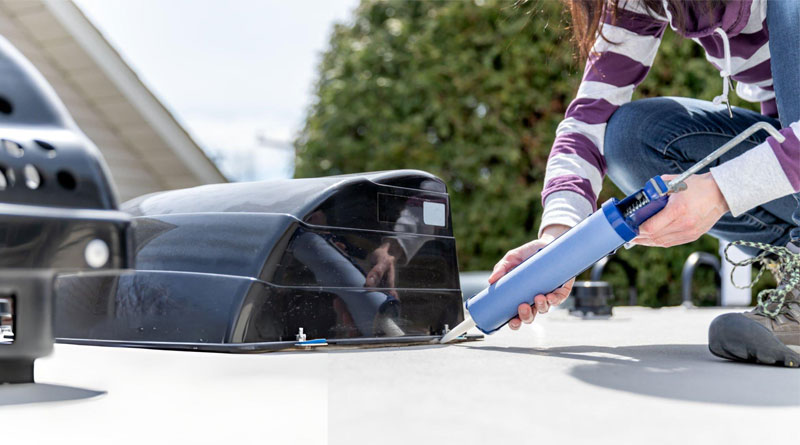
Some sealants come in tubes for a standard caulk gun, making them convenient for small repairs. Liquid coatings are typically applied with a roller or brush, similar to paint, for larger areas. Consider your comfort level with different application methods. DIY-friendly options often feature longer working times and straightforward instructions. If a product requires special tools or complex preparation, it might be better suited for experienced individuals or professional application.
Cure Time and Working Time
The “working time” refers to how long you have to manipulate the sealant after application before it starts to set. The “cure time” is how long it takes for the sealant to fully harden and achieve its maximum strength and waterproofing. For quick repairs or projects with limited time, a sealant with a faster cure time might be preferable. However, a longer working time can be beneficial for larger projects or for beginners who need more time to ensure proper application. Always plan your application around weather forecasts, as rain during the cure time can compromise the seal.
Odor and VOC Content
For health and comfort, especially if you’re working in a confined space or sensitive to strong chemical smells, consider sealants with low odor and low Volatile Organic Compound (VOC) content. Many modern formulations are designed to be safer for both the user and the environment, allowing for more comfortable application.
Color and Aesthetics
While often overlooked, the color of your sealant can impact your RV’s appearance and even its interior temperature. White sealants are popular for roofs as they reflect sunlight, helping to keep the RV cooler. Matching the sealant color to your existing roof or trim can also contribute to a cleaner, more professional finish.
Shelf Life and Storage
If you plan to keep leftover sealant for future touch-ups, check its shelf life and recommended storage conditions. Proper storage can help maintain the sealant’s integrity and ensure it’s effective when you need it next.
Preparation is Key: Before You Seal
Even the best sealant will fail if applied to an improperly prepared surface. Thorough preparation is crucial for strong adhesion and a long-lasting seal.
- Cleaning the Roof Thoroughly: Start by cleaning your RV roof meticulously. Remove all dirt, grime, oxidation, mildew, and loose debris using an RV-specific roof cleaner and a soft brush. Rinse thoroughly and allow the roof to dry completely. Any residue will prevent the new sealant from bonding properly.
- Inspecting for Damage: Before applying new sealant, perform a detailed inspection of your entire roof. Look for existing cracks, punctures, deteriorated sealant, or soft spots in the roof material. Address any structural damage or larger tears first, as sealant alone may not be sufficient for significant repairs.
- Removing Old Sealant: For optimal adhesion, it’s often best to remove old, cracked, or peeling sealant. Use a plastic scraper or a putty knife to carefully lift away old material without damaging the roof surface. For stubborn residue, specialized sealant removers might be necessary, but ensure they are compatible with your roof material. Clean the area again after removal to eliminate any residue from the old sealant or remover.
Application Tips for Best Results
Once your RV roof is clean and prepared, proper application techniques will ensure a durable and effective seal.
- Following Manufacturer Instructions: Always read and strictly follow the sealant manufacturer’s instructions. This includes recommended application temperatures, humidity levels, cure times, and whether a primer is needed.
- Proper Tools: Use the right tools for the job. For cartridge sealants, a good quality caulk gun provides consistent beads. For coatings, use appropriate rollers or brushes. Having rags and mineral spirits (or the recommended clean-up solvent) on hand for immediate clean-up is also essential.
- Temperature and Humidity Considerations: Most sealants have an ideal temperature range for application. Applying sealant in extremely hot, cold, or humid conditions can affect its adhesion, cure time, and overall performance. Avoid applying during direct sunlight if the surface is too hot, or when rain is expected within the cure time.
- Layering/Coverage: For elastomeric or silicone coatings, multiple thin coats are often more effective than one thick coat. Allow adequate drying time between coats as specified by the manufacturer. Ensure you achieve the recommended coverage rate to form a sufficiently thick and durable membrane.
Maintenance and Longevity
Even the best sealants require ongoing care to ensure maximum longevity.
- Regular Inspection: Make it a habit to inspect your RV roof at least twice a year, or before and after long trips. Look for any signs of cracking, peeling, or shrinking in the sealant. Pay close attention to areas around vents, skylights, and seams.
- Touch-Ups: Small cracks or areas of degradation can often be repaired with a simple touch-up application of the same sealant. Addressing these minor issues promptly prevents them from escalating into major leaks.
Conclusion
Choosing the best RV roof sealant is a critical step in protecting your investment and ensuring your travels are leak-free. By understanding the different types of sealants, considering your roof material and application area, and prioritizing weather resistance and durability, you can make an informed decision. Remember that thorough preparation is just as important as the sealant itself. With the right product and proper application, your RV roof will stand strong against the elements for many years to come, allowing you to enjoy the open road with peace of mind.