Best Trailer Hitch Lock Pins of 2026
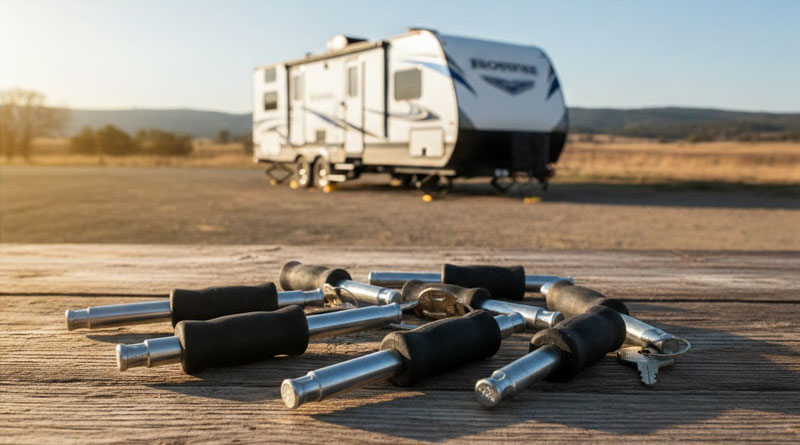
Ensuring the security of your trailer is paramount, and a reliable hitch lock pin is your first line of defense against theft and accidental disconnections. With countless options available, finding the perfect balance of strength, weather resistance, and ease of use can be challenging. This guide cuts through the confusion, highlighting top-rated trailer hitch lock pins that offer robust protection and peace of mind for every towing scenario.
1. CZC AUTO Hitch Receiver Pin Lock

- Pin Dimensions: 5/8″ diameter with 3-1/2″ effective length
- Compatibility: Fits Class III/IV 2″ and 2-1/2″ hitch receiver tubes
- Material: Carbon steel with black electrophoretic paint and zinc alloy core
- Weather Protection: All-weather rubber key slot cap and moisture-resistant seals
The CZC AUTO Hitch Receiver Pin Lock is a robust security solution designed for those who need to protect their trailers, bike racks, or cargo trays from theft. Constructed from high-strength carbon steel, this “dogbone” style lock is remarkably difficult to bend or break. Its 5/8-inch pin diameter is specifically sized for heavy-duty Class III and IV receivers, ensuring a snug and secure fit. To combat the elements, the lock features a black electrophoretic coating and a 360-degree rotating head that makes it easy to manipulate the key even in tight or awkward spaces.
Beyond its physical strength, the lock focuses on long-term reliability through its weatherproofing features. The updated tubular keyhole and zinc alloy core are protected by a rugged rubber cap that seals out dust, moisture, and road salt, preventing the internal mechanism from rusting shut. Whether you are towing a boat, an RV, or a utility trailer, this lock provides essential peace of mind. It is a highly versatile accessory compatible with most standard 2″ and 2.5″ receivers, making it a reliable choice for any vehicle in your towing fleet.
- Pros:
- Strong carbon steel construction resists tampering and bending
- Rotating head allows for easier access from any angle
- Cons:
- Tubular keys can be more difficult to replace if lost
- Black finish may chip over time with heavy metal-on-metal contact
2. Rhino USA 2” Trailer Hitch Pin

- Material: Solid Steel
- Compatibility: Class III & IV (2″ x 2″) Hitches
- Key Feature: Patented slide cap
- Warranty: Lifetime replacement
The Rhino USA 2” Trailer Hitch Pin offers top-tier security for your towing needs, meticulously engineered from solid steel to deliver maximum anti-theft protection. This patented locking receiver pin is specifically designed for Class III and IV hitches (2″ x 2″), ensuring a snug and tamper-resistant connection for trailers, RVs, and other towing equipment. Its robust construction provides ultimate peace of mind, knowing your valuable assets are securely fastened. The design prioritizes durability and reliability, making it a robust deterrent against theft while on the road or parked.
A standout feature is the patented slide cap, which acts as a formidable weatherproof barrier, effectively blocking dirt, mud, and road debris from entering the key mechanism. This ingenious addition not only keeps the hitch pin clean but also guarantees long-lasting durability and consistent performance, even in harsh conditions. Backed by an American-owned, family-operated business and a real lifetime replacement warranty, the Rhino USA hitch pin is a trusted choice for those seeking superior protection and support.
- Pros:
- Solid steel for maximum security
- Patented weatherproof slide cap
- Fits standard Class III & IV hitches
- Cons:
- Specific to 2″ x 2″ receivers
- May be overkill for light-duty towing
3. Master Lock Receiver Lock

- Pin Diameters: 1/2 inch and 5/8 inch
- Usable Length: 2-3/4 inches (70 mm)
- Weight Rating: Up to 10,000 lbs (5/8″ pin)
- Locking Mechanism: Push-to-lock, 4-pin cylinder
The Master Lock Receiver Lock 2866DAT offers versatile and robust security for various towing applications, distinguishing itself with both 1/2-inch and 5/8-inch pins included. The 1/2-inch pin is rated for Class I and II receivers up to 3,500 lbs, while the 5/8-inch pin handles Class III and IV receivers up to 10,000 lbs, making it suitable for a wide range of trailers and RVs. Its innovative swivel head rotates 360 degrees, allowing you to position the keyway conveniently for easy access. The push-to-lock mechanism ensures a secure engagement with minimal effort, providing reliable theft deterrence.
Further enhancing its durability and longevity, the lock features a snap-on cover that provides excellent weather resistance, shielding the keyway from dirt and moisture. This protection, combined with a four-pin cylinder, significantly reduces the risk of lock picking, adding an extra layer of security. With a usable length of 2-3/4 inches, this Master Lock offers adaptable and dependable protection, ensuring your valuable towing equipment remains securely attached and safe from unauthorized detachment.
- Pros:
- Includes both 1/2″ and 5/8″ pins
- Swivel head for easy key access
- Push-to-lock mechanism
- Cons:
- May require consulting rack manufacturers
- Chrome finish may show wear over time
4. RETRUE Trailer Hitch Locks

- Pin Versatility: Adjustable effective length from 3″ to 3.5″ via 4 O-rings
- Locking Mechanism: One-handed “Push-to-Lock” design for key-free engagement
- Security Hardware: Pick-resistant round tubular keys for enhanced theft prevention
- Durability Features: Heavy-duty rubber weather cap and anti-rattle silencer rings
The RETRUE Trailer Hitch Lock is a highly adaptable security accessory that stands out for its user-friendly design and precision fit. One of the most common complaints with standard hitch pins is the annoying “clanking” sound during transport; however, RETRUE solves this by including four adjustable O-rings. These rings allow you to customize the effective length of the pin to match your specific 2-inch or 2.5-inch receiver perfectly, creating a snug, rattle-free connection that remains silent even on bumpy backroads.
Beyond its physical fit, the RETRUE lock excels in convenience and long-term resilience. The “Push-to-Lock” system is a significant advantage for travelers, as it allows you to secure the hitch without fumbling for your keys—you simply push the locking head onto the pin until it clicks. When you do need to remove it, the round tubular keys provide a higher level of security than flat keys, as they are significantly harder for thieves to pick. To protect the internal components from the harsh environment of the road, the lock is equipped with a high-quality rubber cap that seals out moisture, mud, and road salt.
- Pros:
- Adjustable O-rings eliminate hitch rattle and noise
- Convenient push-to-lock feature works without the key
- Cons:
- Requires careful placement of O-rings for the perfect fit
- Extra length can make it a tight fit in recessed bumpers
5. METOWARE Trailer Tongue Coupler Lock
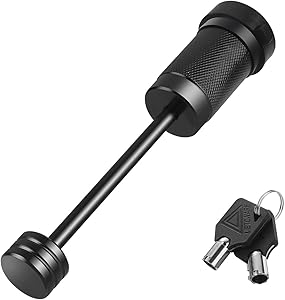
- Pin Diameter: 1/4 inch
- Effective Length: 3-1/2 inch
- Material: Heavy-duty steel with electrophoretic paint
- Locking Type: Push-to-lock, tubular key
The METOWARE Trailer Tongue Coupler Lock offers robust security specifically designed for latch-type couplers, making it an excellent choice for trailers, RVs, cars, boats, and trucks. Constructed from heavy-duty steel and enhanced with electrophoretic paint, this lock is built for durability and strength. Its 1/4-inch diameter pin with a 3-1/2 inch effective length provides a secure hold, preventing unauthorized detachment. The reinforced zinc alloy tubular lock core, coupled with stronger tubular keys, significantly enhances its resistance to tampering and picking, ensuring your valuable assets remain protected.
Ease of use is a key highlight, thanks to its convenient push-to-lock design; you can secure it simply by pushing the head without needing the key. Unlocking is equally straightforward—a slight turn of the tubular key causes the pin to pop out. Furthermore, its surface features electrophoretic paint and a watertight rubber cap, offering superior rust protection and keeping the keyhole free from moisture and dirt, even in challenging weather. This compact yet powerful lock provides reliable, long-term security, ensuring peace of mind on all your towing journeys.
- Pros:
- Heavy-duty steel construction
- Excellent rust and weather protection
- Easy push-to-lock operation
- Cons:
- Specific to latch-type couplers
- Smaller 1/4″ pin diameter
6. CZC AUTO Black Trailer Hitch Coupler Lock

- Pin Diameter: 1/4 inch
- Effective Length: 3/4 inch
- Material: High-strength steel with electrophoretic paint
- Operation: Flat key, spin to lock/unlock
The CZC AUTO Black Trailer Hitch Coupler Lock offers a compact and secure solution for protecting your tow boat, RV, truck, or car’s coupler. Featuring a 1/4-inch diameter tongue lock pin with a concise 3/4-inch effective length, this lock is designed for portability and convenience, easily fitting into a pocket or vehicle compartment. Constructed from high-strength steel and coated with black electrophoretic paint, it provides excellent durability and resistance against theft and corrosion, ensuring long-lasting performance even in demanding environments. This lock serves as a vital deterrent, giving you confidence in the security of your trailer.
Operating this coupler lock is straightforward, requiring 5-7 spins of the flat key to engage or disengage the mechanism. This simple yet effective operation, combined with its robust construction, makes it a reliable choice for everyday use. As a product from CZC AUTO, a reputable brand in hitch security, it comes with a 30-day money-back guarantee and a 12-month warranty for quality-related issues, reinforcing its trustworthiness. For those needing a small, strong, and corrosion-resistant coupler lock, this CZC AUTO offering is an excellent and well-supported option.
- Pros:
- Compact and portable design
- High-strength, corrosion-resistant steel
- Simple flat key operation
- Cons:
- Very specific small size (3/4″ span)
- Flat key might be less secure than tubular
- Requires multiple key turns
7. CURT 23518 Black Trailer Hitch Lock

- Pin Diameter: 5/8 inch
- Usable Length: 2.85 inches
- Material: High-strength steel with powder coat
- Locking Mechanism: 1/4-turn activation
The CURT 23518 Black Trailer Hitch Lock provides dependable security for your trailer and hitch ball mount, built with high-strength steel construction to deter theft effectively. Its robust design is complemented by a barbell-style appearance, which not only looks formidable but also reinforces its anti-theft capabilities. Featuring a 5/8-inch diameter pin and 2.85 inches of usable pin length, this receiver hitch lock is widely compatible, fitting most 2-inch x 2-inch hitch receivers with a corresponding 5/8-inch hole, though it’s important to note it’s not designed for double-walled receiver tubes.
Operating the CURT hitch lock is remarkably easy, thanks to its simple 1/4-turn lock activation, allowing for quick and convenient locking and unlocking as needed. To ensure longevity and reliable performance, the internal components are shielded from the elements by an included watertight dust cap. Additionally, the entire hitch lock benefits from a durable powder coat finish, protecting it against corrosion. For added convenience, two keys are provided, allowing for a spare or shared access, making this a practical and secure choice for any trailer owner.
- Pros:
- High-strength steel construction
- Simple 1/4-turn lock activation
- Watertight dust cap and powder coat
- Cons:
- Not compatible with double-walled receiver tubes
- Specific to 5/8-inch pin holes
How to Choose Trailer Hitch Lock Pins
Trailer hitch lock pins are more than just simple accessories; they are critical security devices that protect your valuable investments from theft and accidental detachment. Whether you’re towing a boat, RV, cargo trailer, or bike rack, a robust lock pin provides peace of mind. Without adequate security, your trailer could become an easy target for thieves or detach unexpectedly due to road vibrations or improper coupling. Choosing the right lock involves understanding the different types available, key features, and compatibility with your specific towing setup. This guide will walk you through everything you need to know to select the best trailer hitch lock pin for your needs, ensuring both security and convenience on every journey.
Understanding the Different Types of Trailer Hitch Locks
Trailer hitch locks come in various designs, each serving a specific purpose in securing your towing system. Knowing these types is the first step in making an informed decision.
Receiver Locks
Receiver locks are designed to secure your hitch assembly (like a ball mount or cargo carrier) into the receiver tube of your tow vehicle. They replace the standard hitch pin and clip, making it impossible for someone to simply pull out the entire hitch assembly. Common styles include barbell locks, which feature a straight pin with a locking head on one end and a fixed head on the other, and dogbone locks, which have an extended, often covered, locking mechanism. Flush locks provide a more discreet appearance, sitting closer to the receiver opening. These locks typically use a key mechanism to secure the pin, preventing unauthorized removal of your ball mount or accessory.
Coupler Locks
Coupler locks, on the other hand, secure the trailer itself to prevent it from being hitched to an unauthorized vehicle or even moved when unhitched. These locks are often placed over the trailer’s coupler, effectively jamming the mechanism that latches onto a hitch ball. Styles vary widely, including U-locks that encompass the coupler, ball locks that insert into the coupler recess, and specific tongue locks that secure the latch. Coupler locks are crucial for preventing theft of an unhitched trailer and can provide an additional layer of security when the trailer is hitched, preventing unwanted detachment.
Combination Locks
While not a distinct type in terms of mechanism, many individuals and some manufacturers offer “combination” security by integrating aspects of both receiver and coupler locks or selling them as a matching set. This might involve keyed-alike receiver and coupler locks, or an all-in-one device for very specific applications. The goal is to provide comprehensive protection, securing both the connection to the tow vehicle and the trailer itself, thereby creating a more formidable deterrent against theft.
Key Factors to Consider When Choosing a Hitch Lock Pin
Selecting the ideal hitch lock pin requires careful consideration of several technical and practical aspects. Overlooking any of these could compromise the security of your trailer.
Hitch Type and Class
Compatibility is paramount. Hitch lock pins are manufactured to specific diameters and lengths to fit different hitch receiver classes. Class I and II hitches (typically 1-1/4″ receiver tubes) usually require a 1/2-inch diameter pin, rated for up to 3,500 lbs. Class III, IV, and V hitches (2″, 2-1/2″, or 3″ receiver tubes) almost always use a 5/8-inch diameter pin, capable of handling loads up to 10,000 lbs or more. Always measure your receiver tube and confirm the necessary pin diameter and usable length (the distance between the locking mechanism and the pin head) to ensure a secure fit without excessive rattling or, worse, being too short to engage.
Material and Construction
The strength and durability of a hitch lock pin directly correlate with its material and construction. Look for pins made from hardened steel, which offers superior resistance to cutting, prying, and drilling attempts. Some high-end locks may feature advanced alloys for added strength. The finish is also important for longevity; black electrophoretic paint, chrome plating, or durable powder coating prevents rust and corrosion, especially for locks exposed to harsh weather. The quality of the lock cylinder (e.g., disc detainer, tubular, or high-security pin tumbler) also contributes significantly to its resistance against picking and tampering.
Security Features
Beyond basic strength, modern hitch lock pins incorporate various features to enhance security. Anti-drill plates protect the lock cylinder from penetration. Rotating heads or shackles can make it harder for tools to gain leverage. Tubular keys are often preferred over standard flat keys as they are more difficult to duplicate and pick. Some locks feature a push-to-lock design, allowing for quick, key-free engagement, which is convenient but should still offer robust internal locking mechanisms. Shrouded designs, where the locking mechanism is protected within a casing, add another layer of tamper resistance.
Weather Resistance
Hitch locks are constantly exposed to the elements, making weather resistance a crucial factor. Locks with rubber caps or integrated dust covers for the keyway prevent moisture, dirt, and road grime from entering the mechanism, which can cause seizing or corrosion over time. Corrosion-resistant finishes, as mentioned, are vital for maintaining the lock’s integrity and appearance. A poorly weather-sealed lock can quickly become jammed or dysfunctional, defeating its purpose.
Ease of Use
While security is paramount, a lock that is difficult to operate can be frustrating. Look for designs that offer straightforward locking and unlocking mechanisms. Push-to-lock systems are often praised for their convenience, allowing you to secure the hitch without fumbling for a key. Clear visual indicators that the lock is engaged are also helpful. The key design itself should be ergonomic and easy to insert, especially in low light or cold weather. A balance between high security and practical usability is key for frequent towers.
Brand Reputation and Warranty
Investing in a hitch lock from a reputable brand often means better quality materials, superior engineering, and reliable customer support. Established brands have a track record of producing secure and durable products. Always check for a warranty; a strong warranty (e.g., a lifetime replacement) indicates the manufacturer’s confidence in their product’s durability and offers peace of mind against manufacturing defects or premature failure.
Keying Options
For users with multiple locks (e.g., a receiver lock and a coupler lock), keyed-alike options can be a significant convenience. This allows a single key to operate multiple locks, reducing keyring clutter. Businesses or fleets might benefit from master key systems. While not always available for all models, considering these options can streamline your security setup if you manage several trailers or towing accessories.
Pin Diameter and Usable Length: Why Specifics Matter
The exact dimensions of a hitch lock pin are non-negotiable for both security and functionality. The pin diameter must match the diameter of the hole in your receiver tube and ball mount. Using a pin that is too small will result in a loose connection, rattling, and potential accelerated wear on both the pin and the receiver. Conversely, a pin that is too large simply won’t fit. The most common diameters are 1/2-inch for lighter applications and 5/8-inch for heavier-duty towing.
Equally critical is the usable length of the pin. This refers to the length of the pin shaft that can pass through your receiver and hitch accessory. It’s crucial that this length is sufficient to span both walls of your receiver tube and any inserted accessory (like a ball mount) and still allow the locking mechanism to fully engage on the other side. A pin that is too short cannot be locked, rendering it useless. A pin that is excessively long, while still locking, might protrude too much and be more susceptible to bending or impact, though many designs account for this with flush or dogbone styles. Always measure the thickness of your receiver and accessory to ensure the usable length of the lock pin is appropriate.
Installation and Maintenance Tips
Once you’ve chosen the perfect hitch lock pin, proper installation and routine maintenance are essential to maximize its effectiveness and longevity.
Proper Installation
Always ensure the lock pin is fully inserted through both sides of the receiver and the accessory. The locking mechanism should engage completely and securely. After locking, give the hitch assembly a gentle tug to confirm it is firmly attached and cannot be easily removed. For coupler locks, ensure the lock is positioned correctly to fully obstruct the coupler mechanism, preventing it from latching onto a ball or being removed.
Regular Lubrication
Hitch locks are exposed to harsh conditions, so their internal mechanisms can seize without care. Periodically apply a small amount of graphite powder or a silicone-based lubricant into the keyway. Avoid oil-based lubricants as they can attract dirt and grime, leading to clogs. Lubrication ensures smooth operation of the key and the locking mechanism, preventing frustrating jams.
Storage
When not in use, if your lock is removable, consider storing it in a clean, dry place, especially in regions with extreme weather. This further protects it from corrosion and extends its life. Keep spare keys in a secure, memorable location, separate from your primary set.
Common Mistakes to Avoid
Even with the best intentions, users sometimes make errors that compromise their hitch lock’s security or functionality.
Using the Wrong Size Lock Pin
This is by far the most common mistake. A 1/2-inch pin in a 5/8-inch receiver will be loose and offer minimal security. A pin that’s too short for your setup won’t lock. Always double-check your hitch class and receiver dimensions against the lock’s specifications.
Ignoring Weather Protection
Choosing a lock without adequate weather sealing or neglecting to use the dust cap can lead to internal corrosion and a seized lock. This can leave your trailer vulnerable or make it impossible to detach.
Opting for Cheap, Unbranded Locks
While it might be tempting to save a few dollars, very cheap locks often use inferior materials and less secure locking mechanisms. They are easier to defeat by thieves and may fail prematurely, offering a false sense of security.
Forgetting to Lock It
It sounds obvious, but in a rush, people sometimes insert the pin but forget to engage the lock. Always confirm the lock is fully engaged before driving away or leaving your trailer unattended.
Conclusion
Choosing the best trailer hitch lock pin is a crucial decision for the security and peace of mind of any trailer owner. By understanding the different types of locks, meticulously considering factors like compatibility, material, security features, and weather resistance, you can make an informed choice. Remember that a high-quality hitch lock is an investment in protecting your valuable assets. Coupled with proper installation and regular maintenance, the right lock pin will provide robust protection against theft and ensure the safe journey of your towed equipment for years to come.